FinTech Integration Services

FinTech integration services connect your financial product to the payment providers, KYC and AML vendors, banks and BaaS partners it depends on. Prostrive builds those integrations for startups, scale-ups and banks, along with the layer that keeps them running when a provider times out or changes its API. Integrations are where most of the work in FinTech software development services sits, so that's where we start.

Let's talk

Why FinTech Integrations Break After Launch

FinTech integrations rarely break on the first API call. They break months later, when a payment provider times out halfway through a transfer, a KYC vendor retires the API version you built on, or a partner goes down on a busy day. What's at risk then is the balance in your ledger.

Synapse showed how far that can go. When the US banking-as-a-service middleware provider went bankrupt in 2024, customers of FinTechs built on it lost access to their money while records were untangled. So we design the failure handling first, and your ledger stays yours.

How We Build Integrations That Survive Failure

Three engineering choices decide whether a FinTech integration holds up in production: operations that are safe to retry, one layer of our own between your product and every provider, and compliance built into each connection. They say more about a partner than how many providers it has connected, because they decide what happens when something goes wrong.

Retries That Never Pay Twice

Every payment call carries an idempotency key, so a retry after a timeout can't charge your customer twice. Provider events come in through signed webhooks rather than polling, and we handle the ones that arrive late, twice or out of order. A daily reconciliation against your own ledger flags any mismatch before a customer does.

One Layer Between You and Every Provider

Each provider plugs into an integration layer in your FinTech backend that translates its API into your own data model. Swapping a payment or KYC provider then means changing one adapter, not your product, and two providers can run side by side as fallback. Your ledger stays as the system of record.

Compliance Built Into Every Connection

We keep PCI DSS scope small through tokenisation, build in strong customer authentication for PSD2 and log every call for your audit trail. DORA has applied to EU financial entities since January 2025, and PSD3 is on its way, so each integration can absorb a rule change. Your licence stays with you.

FinTech integration layer
Our Services

Our FinTech Integration Services

Our FinTech integration services cover every kind of system a financial product leans on, from payment gateways and banks to crypto rails. Each integration runs on the same retry-safe layer. What differs is the point where that category tends to fail, and that's what we design around first.

  • Payment Gateway Integration

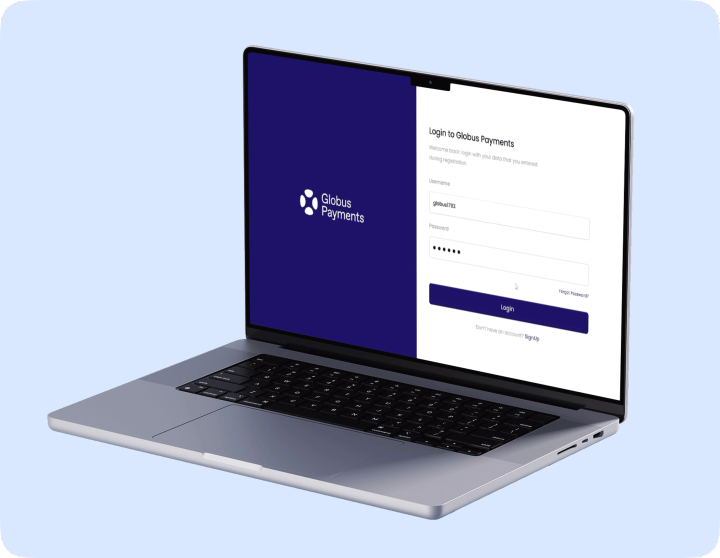
    Payment gateway integration connects your checkout to gateways and processors for card and alternative payments. The hard part is payment state: a payment can be authorised, pending or failed across redirects, webhooks and settlement files. We keep that state consistent and card data out of your systems. For Globus Payments, we built the API integrations with banks and financial service providers.

    Learn more
  • KYC/AML Integration

    KYC/AML integration puts identity verification, document checks and sanctions screening inside your onboarding flow. Results often arrive asynchronously, so we handle webhooks, retries and manual review queues without sending a new customer back to the start. The aim is to cover what your regulator expects without losing applicants to friction.

    Learn more
  • Open Banking Integration

    Open banking integration gives your product account information and payment initiation (AIS and PIS) through PSD2 APIs, either directly with banks or through an aggregator. The work sits in consent: capturing it, refreshing access before it expires and coping with banks that implement the same standard differently. We choose the route during the discovery phase.

    Let's talk
  • Core Banking Integration

    Core banking integration connects apps, digital channels and new products to a bank's core, including legacy cores that were never built for APIs. We usually put middleware in between that translates data models both ways and shields the core from extra load. The core stays the system of record, reached through one controlled route.

    Learn more
  • Banking-as-a-Service Integration

    With Banking-as-a-Service integration, you offer accounts, IBANs, transfers and cards through a licensed BaaS partner, without a banking licence of your own. The risk sits in the ledger: the partner keeps one record of balances and you keep another. We reconcile the two every day, so you always know which figure is right.

    Let's talk
  • Card Issuing Integration

    Issuing your own virtual and physical cards runs through card issuing integration with an issuer-processor, covering issuing, activation and spend controls. Authorisation requests need an answer from your system within a tight window, so the decision logic has to be fast and fail safely. We build that logic and keep card events in sync with your ledger.

    Let's talk
  • Cross-Border Payment Integration

    Cross-border payment integration handles multi-currency transfers and FX through your payment and banking partners. Rates, fees and settlement times differ per corridor, and the settled amount can differ from the quote. We record every step against your ledger, so FX differences show up in your system instead of in a spreadsheet at month end.

    Let's talk
  • Credit Data Integration

    Scoring and underwriting models are only as good as their inputs, and credit data integration feeds them credit bureau and alternative data. Each source returns its own format, so we normalise the data before it reaches a decision. Eligibility rules stay separate from the code that fetches the data, which keeps lending decisions auditable and easy to change with your credit policy.

    Let's talk
  • Fiat-to-Crypto Integration

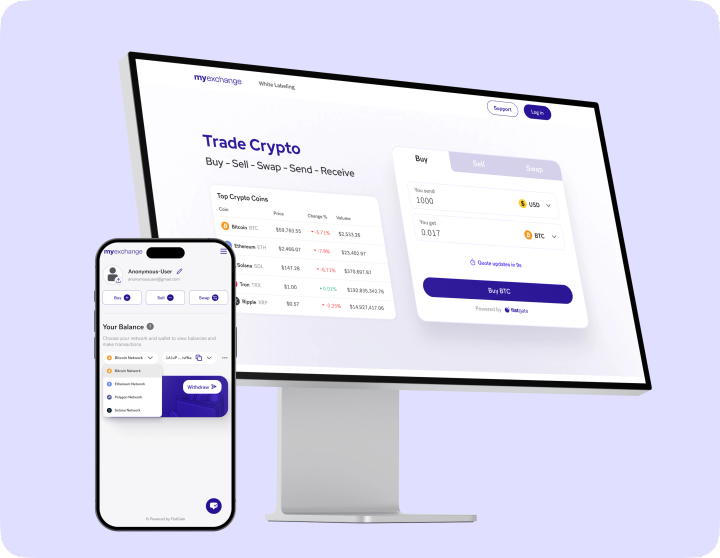
    For products that move money between fiat and crypto, fiat-to-crypto integration connects you to on- and off-ramps, crypto payment gateways and custody providers. For FiatGate, a white-label non-custodial crypto wallet and exchange, we built the complete platform with third-party APIs for wallet management and exchange functionality.

    Learn more
Choosing a Partner

How to Choose a FinTech Integration Company

The right FinTech integration company can explain what happens to your money when a provider fails, and will tell you when you don't need custom work at all. A sales demo shows the happy path. These checks show how a partner thinks about the months after launch.

Ask Whether They Would Tell You Not to Build

If a provider's hosted payment page or an off-the-shelf connector covers what you need, use it: it's faster and leaves PCI DSS scope with the provider. We don't sell a ready-made connector platform, so we have no reason to push custom work, and we'll tell you when you don't need it.
Check How They Choose the Connection Method

A hosted page, an SDK or a direct API gives you more control at each step, and more compliance scope and build effort with it. For bank data, an aggregator reaches many banks through one API, while direct bank APIs pay off at high volume with a few banks. We decide per integration, in discovery.

Ask Who Fixes It When a Provider Changes Its API

Providers retire API versions and change behaviour, often with notice that's easy to miss. We version every integration, track deprecation notices and plan the upgrade before the deadline. The team that built the integration can stay on to maintain it, so nobody has to rediscover how it works under pressure.

Make Sure the Integration Layer Is Yours

Some vendors keep the integration code or license it back to you. With us, the code and intellectual property of every integration belong to you under all our standard contracts. You can bring it in-house or move to another FinTech integration provider without starting again.

See Whether Their Engineers Join Your Team

An integration built outside your team becomes a black box the day the vendor leaves. Our engineers join your standups and Slack channels, with Western management on-site in our hubs, so your own developers know how every connection works.

Look for Real Financial Integrations in Their Work

Ask for projects where the partner connected to banks, payment providers or exchanges. For Globus Payments, an EMI-licensed payment company in London, we built API integrations with banks and financial service providers, plus regulation-compliant onboarding flows. For FiatGate, we connected third-party wallets and exchange APIs.

Our Process

Our FinTech Integration Process

Our FinTech integration process starts with an integration map, not with code, and ends with the same team keeping every connection working as providers and rules change. The map lists each provider, data flow and regulation that applies, so you know what gets built first and why before you commit to a budget.

Step 1: Discover & Define - Process illustration
Step 2: Assemble Elite FinTech Integration Teams - Process illustration
Step 3: Design, Develop & Deliver - Process illustration
Step 4: Nurture & Evolve - Process illustration
Build your team

Ways to Work With Our Integration Engineers

A single, clearly scoped integration fits Project-Based Development, while a platform that keeps adding and changing providers is better served by a team that stays. Whichever model you choose, we work without long-term contracts.

Dedicated Teams

A team that works only on your product and takes direction from you. Dedicated Teams suit platforms with many providers and frequent change, where knowledge of every integration needs to stay with the same engineers.

Team-as-a-Service

A team we manage, for when you need integration capacity quickly and don't want to oversee developers yourself. With Team-as-a-Service, you set the priorities, such as a new provider or market, and we run the team.

Project-Based Development

A clearly scoped integration, such as adding a KYC provider or moving to a new payment provider, delivered from concept to deployment. With Project-Based Development, we're accountable for getting it live.

Technologies

The Technology Behind Our API Integrations

Our API integrations run on technology chosen for reliable data flow between systems. We build integration services in Node.js, Python and Django, with React, Vue.js or Angular where a flow needs a screen. Kafka, Redis Streams and WebSockets carry webhooks and real-time events, and Docker, Kubernetes and AWS let services retry and recover without manual work.

Angular
.NET
C#/C++/C
PHP
Pulumi
Databricks
Flutter
React.js
JavaScript
Docker
Kubernetes
AWS
Angular
.NET
C#/C++/C
PHP
Pulumi
Databricks
Flutter
React.js
JavaScript
Docker
Kubernetes
AWS

Global Reach

Established in 2021. Our team spans 4 countries (The Philippines, The Netherlands, Hong Kong, Armenia), delivering 100+ transformative projects across the world.

Our Work

Trusted by companies we've helped grow

A selection of the products our embedded teams have helped build.

  • Globus

    Globus Payments

    Globus Payments is an EMI-licensed payment company in London serving the logistics sector. We built the API integrations with banks and financial service providers its payment infrastructure runs on, plus regulation-compliant onboarding flows.

    Read the case study
  • Fiatgate

    FiatGate

    FiatGate is a white-label platform for launching a branded, non-custodial crypto wallet and exchange. We built the complete platform in JavaScript, with third-party APIs for wallet management and exchange functionality.

    Read the case study
  • Hyer

    Hyer

    Hyer is a private jet booking app, and an integration project outside finance. We connected the app to several private jet operators through their APIs, with real-time pricing and availability.

    Read the case study
View all case studies

Plan Your FinTech Integration

Book a Discovery call and walk us through the systems your product has to connect to. You'll get a first view of your integration map: which providers, which connection method and which rules apply, before you commit a budget.

FAQs

Frequently Asked Questions About FinTech Integration Services