Fintech Backend Development Services

Fintech backend development decides whether your product holds up day to day. We build the server-side systems behind payment apps, wallets and trading platforms, from the transaction engine to the APIs that keep money moving safely. Our senior engineers design them to stay secure under load and to scale with your user base.

Let's talk

Our Fintech Backend Development Services

Our fintech backend development services cover the whole server side of your financial product, and they're part of our wider fintech software development work. That includes transaction processing, account and balance management, ledgers and reconciliation, along with authentication and reporting.

Users never see any of it, yet they lean on it every time they tap pay. These backends also sit behind the apps from our fintech app development and behind your web frontends, running the logic and data for both.

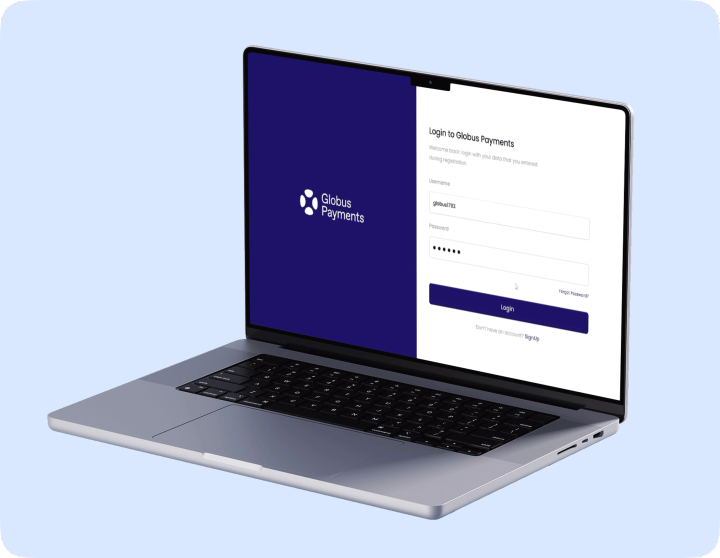
For Globus Payments, an EMI-licensed payment provider in London, we built API-driven payment solutions that connect to external banking partners. Some clients come to us for a new backend built from scratch, others for a refactor of a system that's buckling under growth. Either way, we handle the build and the testing, and we stay on for support afterwards.

Our Services

What We Build on the Fintech Backend

Our fintech backend development services cover the full server side of your financial product — the systems users never interact with directly, but depend on for every payment, balance check and transfer.

  • Transaction Processing and Ledger Systems

    We build transaction processing, account and balance management, ledgers, reconciliation, authentication and reporting. These are the parts users never see, but lean on every time they tap pay.

    Let's talk
  • Scalable Backend Architecture

    We design modular, service-based architectures, so you can scale the busy parts on their own with no need to re-deploy the whole system. Payment execution and risk checks run as separate services, and so does customer data. They talk to each other through versioned APIs, which means a slow downstream job never holds up a live transaction.

    Let's talk
  • Backend Integrations for Financial Platforms

    Backend integrations are what turn a standalone system into a working financial platform. In most fintech products, the backend is only as useful as its connections to everything around it. We build secure APIs and middleware that link your core to payment gateways and banking partners. They also connect it to KYC and AML providers, and to open banking rails.

    Where a system runs on a legacy core, we replace brittle, outdated integrations with versioned APIs. That breaks down data silos and lets services talk to each other in real time.

    Let's talk

Backend Architecture and Security

The backend architecture you choose largely decides how far your fintech system can scale.

Secure Backend Infrastructure for Financial Data

If you're handling financial data, secure backend infrastructure isn't something you can bolt on later. We build security into the backend from the very first architecture decision. In practice, that means encrypting sensitive data at rest and in transit, and adding multi-factor authentication. Access control is role-based, and every transaction leaves an audit trail.

Backend Technology Stack for Fintech

We pick our backend technology stack for fintech per project. No single stack wins every time, so the choice comes down to what your product actually does. For event-driven, real-time workloads, we build server-side systems on Node.js. When data processing or machine learning comes in, we use Python or Django, and we reach for Ruby on Rails when speed to market matters most.

On infrastructure, Docker and Kubernetes give you containerised deployments on AWS that scale automatically. Kafka and Redis Streams carry the real-time data pipelines, while WebSockets push live updates. We can explain every choice we make, and your own team can maintain the result.

Penetration Testing and Code Reviews

Early on, we map out the threats along the money flows. Then we prove the controls work, with logs that will stand up in front of a regulator. PCI DSS and GDPR shape how we structure data and access from day one, and so do AML requirements. We also run penetration tests and code reviews at every stage of the build.

More Secure Finance
Solutions

How We Approach Fintech Backend Development

From event-driven architectures to legacy modernisation, our fintech backend work is shaped around your product's specific requirements — not a generic template.

Event-Driven Architecture for Real-Time Fintech

For Ampang, an AI crypto trading bot, we built an event-driven backend on Node.js and Python. Kafka moves the real-time data and Kubernetes takes care of auto-scaling. We use the same patterns whether a platform handles a hundred transactions a day or a hundred thousand.
Payment Gateway and Banking Partner Integrations

Most fintech backends live or die by how well they connect to everything around them. We build secure APIs and middleware that link your core to payment gateways, banking partners, KYC and AML providers, and open banking rails. This work sits close to our banking software development.

Legacy Core Modernisation

For systems with a legacy core, we swap brittle, outdated integrations for versioned APIs that cut data silos and keep services talking in real time. To go deeper on the API layer itself, our guide to fintech API development covers the patterns we use.

New Build or Refactor — We Work Both Ways

Some clients need a backend built from scratch. Others need us to refactor a system buckling under growth, or extend a team that's mid-build. We cover the build, the testing and ongoing support regardless of where you're starting from.

Collaboration Models for Backend Development

You can work with us through three collaboration models for backend development, depending on what suits you. Western on-site management at our development hubs keeps quality and communication on track the whole way through.

Dedicated Backend Teams

With Dedicated Teams, our backend engineers work only on your product. You manage them, and they join your standups and Slack.

Team-as-a-Service

Team-as-a-Service gives you the same senior talent, but we take care of management and delivery.

Project-Based Backend Development

Got a defined scope? Then Project-Based Development delivers your full backend as one end-to-end build. There are no long-term contracts, so you can scale the team up or down as your roadmap shifts.

Our Work

Trusted by companies we've helped grow

A selection of the products our embedded teams have helped build.

  • Globus

    Globus Payments

    Globus Payments is a London-based provider of EMI-licensed payment solutions for the logistics sector. Our team built the API integrations that connect its payment services to its clients' systems.

    Read the case study
  • Fiatgate

    FiatGate

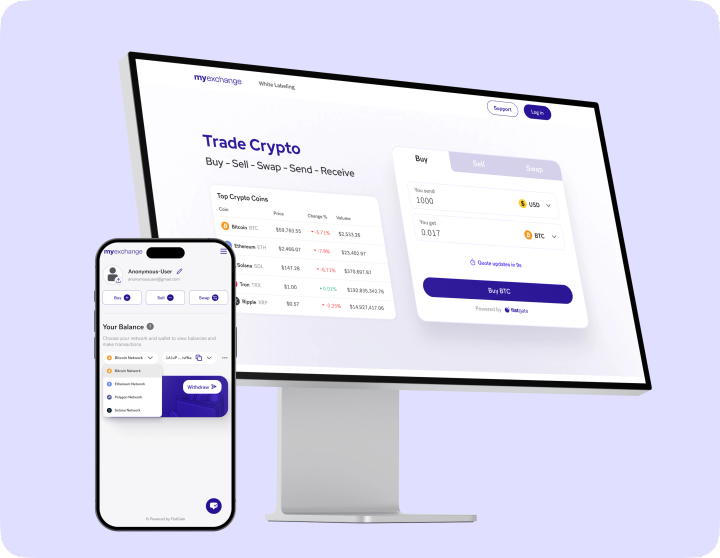
    FiatGate is a white-label platform that lets businesses launch their own branded, non-custodial crypto wallet and exchange. We built the complete platform in JavaScript, with third-party APIs for wallet management and exchange functionality.

    Read the case study
  • Ampang

    Ampang

    Ampang is an AI crypto trading bot built for cross-exchange trading in volatile markets. Its real-time pipelines run on Kafka, Redis Streams and WebSockets and connect to Binance, Coinbase Pro and Kraken through rate-optimised APIs.

    Read the case study
View all case studies

Ready to Transform Your Business?

Get in touch today to discuss your project and unlock scalable, secure digital solutions.

FAQs

Frequently Asked Questions