FinTech AI Development Services

FinTech AI development services cover building and integrating AI into financial products, from fraud detection and credit scoring to compliance automation, AI assistants and predictive analytics. Prostrive is a FinTech AI development company that builds these systems inside your team, as part of its FinTech software development services.

Let's talk
What We Build

Our FinTech AI Development Services

Each capability below solves a different problem and brings its own data, risk and regulatory profile. We scope every project around the one you're actually facing.

  • AI Fraud Detection and Transaction Monitoring

    AI fraud detection earns its keep when it flags a suspicious payment before it settles, while you can still stop it. We build machine learning models that score transactions in real time, spot anomalies in account behaviour and adapt as fraud patterns change. So your team reviews fewer false positives and catches more genuine fraud.

    Behind that sits a streaming data layer built on Kafka and Redis Streams, which lets a model act on a transaction while it's still in flight. For platforms that also need the payment infrastructure itself, our payment software development team works on the same stack.

    Learn more
  • Credit Scoring and Underwriting Models

    Credit scoring models help lenders make faster, more consistent decisions by combining transaction history, behavioural signals and alternative data. The harder part is explaining every decision to a customer, an auditor or a regulator.

    That's why we build explainability into credit models from the first iteration and test for bias before a model goes near production. It also matters legally: the EU AI Act treats creditworthiness assessment as high-risk (more on that below). If you're building a lending or digital banking product around the model, our banking software development team can handle the rest of the platform.

    Learn more
  • Generative AI, LLM Integration and AI Assistants

    Large language models are changing how financial teams handle documents and customer questions. We integrate LLMs into your product for AI assistants that answer account and onboarding questions and for retrieval-augmented generation (RAG) that searches your own policies and contracts. LLMs also power document intelligence, which pulls structured data out of statements, invoices and ID documents.

    In a regulated product, the guardrails matter as much as the model. We define what an assistant can and can't answer, keep sensitive data out of prompts and log interactions for review. And we make sure users know they're talking to AI, as the EU AI Act now requires.

    Let's talk
  • KYC/AML and Compliance Automation

    Manual KYC and AML checks are slow and expensive, and results vary by reviewer. Our AI systems automate identity verification, screen customers and transactions against sanctions lists and flag suspicious activity patterns for your compliance team to review.

    These tools plug into your onboarding and transaction monitoring workflows and support your obligations under frameworks such as AML regulations, GDPR and PSD2. For platforms that need the full onboarding and verification stack, see our KYC software development services.

    Learn more
  • Algorithmic Trading and Market Analytics

    AI trading systems have to read market signals, process large volumes of data and act before the market moves on. Our work on Ampang, an AI crypto trading bot, shows what that looks like in production. It uses reinforcement learning to make decisions as market conditions shift and LSTM neural networks to find patterns in time-series data. Kafka and Redis Streams feed live data into its Node.js, Python and TensorFlow stack.

    The same principles apply to market analytics and signal detection for investment platforms. For the wider trading platform, our trading software development team covers order management, exchange connectivity and the infrastructure around the model.

    Learn more
  • Predictive Analytics and Custom Machine Learning Models

    Predictive analytics turns raw transaction data and operational metrics into forecasts you can act on: cash flow, churn, portfolio risk and customer segmentation. When an off-the-shelf model can't handle your data, we build custom machine learning models using supervised, unsupervised and reinforcement learning techniques.

    We handle the full model lifecycle: data preparation, training, validation, deployment and performance monitoring once the model is live.

    Let's talk

Where AI Fits Across FinTech

AI FinTech development looks different depending on the kind of financial product you run. Here's where it typically adds the most value in each segment.

  • Neobanks and digital banking

    Where AI typically adds value AI assistants, spending insights, personalised product offers, account anomaly detection

  • Lending

    Where AI typically adds value Credit scoring, underwriting support, document checks, application prioritisation

  • Payments and e-wallets

    Where AI typically adds value Real-time fraud scoring, transaction monitoring, payment routing, chargeback analysis

  • Trading and investment

    Where AI typically adds value Algorithmic trading, market signal analysis, portfolio risk modelling

  • Compliance and RegTech

    Where AI typically adds value KYC automation, AML screening, regulatory document review, audit reporting

Machine learning visual for FinTech AI development: custom model or existing AI service

Should You Build a Custom Model or Integrate an Existing One?

Not every AI feature needs a custom model. If a proven AI service or a large language model already solves the problem well, integrating it is usually faster and more cost-effective, and we'll tell you so. A custom model pays off when your own data is the competitive advantage or when you need full control over how decisions are made and explained. It's also the way to go when an external service can't meet your data residency or compliance requirements.

In practice, many FinTech solutions combine the two: an existing LLM for document handling, a custom model for risk scoring and a shared data pipeline underneath. We weigh that trade-off with you during discovery, before any model work starts. If the AI you need isn't specific to financial services, our AI integration services cover the broader toolset.

How We Build

How We Build FinTech AI Solutions

AI in financial services carries higher stakes than most software projects. The data is more sensitive and regulators never stop watching. Every architecture decision also has to account for auditability and explainability from the outset.

Responsible AI by Design

We treat responsible AI as part of the engineering work. We check training data for bias and build explainability into model outputs, so your team can defend the reasoning behind any decision. Wherever a model's output affects a customer, a human stays in the loop.


Regulatory Compliance and Data Privacy

The EU AI Act now shapes how AI can be used in financial products, and its timeline changed in 2026. Under the Digital Omnibus, in force since 27 July 2026, the high-risk obligations for creditworthiness assessment and for risk assessment and pricing in life and health insurance apply from 2 December 2027. AI used purely to detect financial fraud is excluded from that credit category. The transparency duties have applied since 2 August 2026, so you have to tell users when they're interacting with an AI system such as a chatbot.

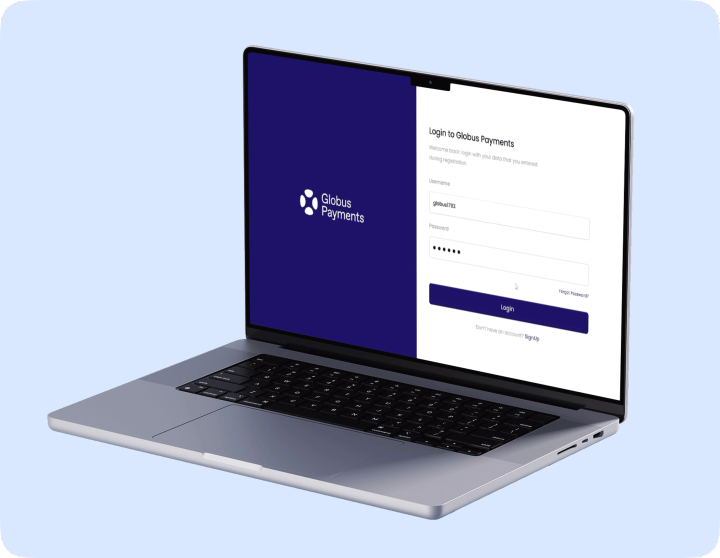
Alongside the AI Act, GDPR, DORA, PSD2 and, for the UK, FCA requirements all govern how financial data is processed. We build for that at architecture level: data minimisation, controlled access, encryption at rest and in transit, and audit-ready logging. Our work for Globus Payments, an EMI-licensed payment provider, taught us to treat data governance as a structural requirement from the start.

Scalable Architecture and Integration

A model that works in testing has to perform just as reliably on live financial data at production load. We run AI components on microservices architectures with containerised deployments on Docker and Kubernetes, scaling horizontally as data volumes and user numbers grow.

Integration matters just as much. We connect AI components to your existing platforms, core systems and third-party services through secure APIs. Our FinTech backend development specialists work on this with us, so the AI plugs straight into the operations you already run.

Why Prostrive

Why Choose Prostrive for FinTech AI Development

Plenty of teams can train a machine learning model. Fewer can deliver AI that holds up inside a regulated financial product, with real customers and real compliance obligations.

FinTech Knowledge, Not Just Machine Learning Skills

In most software, a wrong model output means a poor recommendation. A fraud model that gets it wrong lets money out of the door or locks a legitimate customer out. A credit model can make an unfair lending decision. That's why domain knowledge matters more here than it would at a generic AI development agency. Our teams work on payment, banking and trading platforms, and our AI work, from Ampang's trading models to compliance automation, comes from people who understand the financial workflow around the model.

You Own the Code and the Models

On a custom build, the code and the intellectual property belong to you, including the models we train for you. That holds under our standard contracts, whichever collaboration model you choose. For AI work this matters more than usual: your trained models and data pipelines are often the most valuable asset in the product, and they shouldn't be tied to a vendor.

Western On-Site Management

Western managers run our hubs on site and own quality assurance and delivery standards day to day. Add cultural workshops and communication training for our teams, and you get the cost-efficiency of remote specialists without the communication gaps that stall so many remote AI projects.

A Partnership That Outlasts the First Release

AI models degrade over time. Data distributions shift, fraud patterns evolve and regulations change, so a model that performed well at launch can quietly underperform six months later. Our team members join your standups and work in your tools. After deployment they stay involved for retraining, performance monitoring and new features.

Our Process

Our Process for FinTech AI Projects

AI projects in financial services involve sensitive data and requirements that change alongside the technology and the regulations. Here's the four-step approach we use to keep them on track.

Step 1: Discover and Define - Process illustration
Step 2: Assemble Your Team - Process illustration
Step 3: Build, Validate and Ship - Process illustration
Step 4: Monitor and Evolve - Process illustration
Build your team
Technologies

Our Tech Stack

Machine learning runs on Python and TensorFlow, and generative AI features on LLM integrations. Node.js handles backend services and API orchestration, Kafka and Redis Streams power real-time data pipelines, and Docker, Kubernetes and AWS let deployments scale with data volume. The exact combination depends on your project, but every tool here has been tested in production on financial platforms.

Angular
.NET
C#/C++/C
PHP
Pulumi
Databricks
Flutter
React.js
JavaScript
Docker
Kubernetes
AWS
Angular
.NET
C#/C++/C
PHP
Pulumi
Databricks
Flutter
React.js
JavaScript
Docker
Kubernetes
AWS

Collaboration Models for FinTech AI Development

AI projects rarely follow a fixed path. Data readiness varies, regulations evolve and models often need more iterations than the first scope allowed for. That's why there are no long-term contracts, and you can scale up or down as your priorities shift.

Dedicated Teams

A dedicated team works on your AI initiatives over the long term, building deep knowledge of your data, compliance requirements and product architecture. It suits companies with ongoing AI roadmaps and several workstreams running in parallel.

Team-as-a-Service

If you need AI capacity but don't want to manage developers yourself, we run the team for you, from recruitment to quality assurance and delivery coordination. You keep full visibility into progress and can adjust scope and team size as priorities change.

Project-Based Development

For a defined objective, such as a fraud detection system, a credit scoring model or a complete AI-powered financial product, we deliver end to end against an agreed scope and timeline. It's the right fit for businesses that know exactly what they need.

Global Reach

Established in 2021. Our team spans 4 countries (The Philippines, The Netherlands, Hong Kong, Armenia), delivering 100+ transformative projects across the world.

Team

The Team Behind Your FinTech AI Solution

Our FinTech AI product developers work on data-intensive, security-critical financial platforms every day. They take time to understand your business logic before writing code, and they'll challenge an architecture decision when a simpler approach would serve you better.

Ace
Ace
Wordpress Developer
Anton
Anton
Full Stack Developer
Arvin
Arvin
Lead Developer
Bea
Bea
Full Stack Developer
Celyn
Celyn
Full Stack Developer
Christian
Christian
Full Stack Developer
Our Work

Trusted by companies we've helped grow

A selection of the products our embedded teams have helped build.

View all case studies

Let's Talk About Your FinTech AI Project

Whether you're adding AI to an existing financial platform or building a new AI-powered FinTech product, we'd like to hear about it. Book a Discovery call and we'll map out what your AI solution needs: data strategy, model architecture, compliance and long-term support.

FAQs

FAQs About FinTech AI Development