FinTech Software Development Services

FinTech software development is building software that moves, stores, lends, invests or protects money, within the rules that govern it. We design and build custom FinTech software for startups, scale-ups and financial institutions across the UK and Europe: banking, payments, wallets, trading, crypto and compliance tooling. As a FinTech software development company, we put our developers inside your team, with no ticket queue in between.

Let's talk

Why FinTech Software Development Is Mostly Integration Work

FinTech software development is mostly integration work. The hard part is connecting your ledger to banks, payment processors, card issuers and KYC providers, and keeping every balance correct when one of them fails.

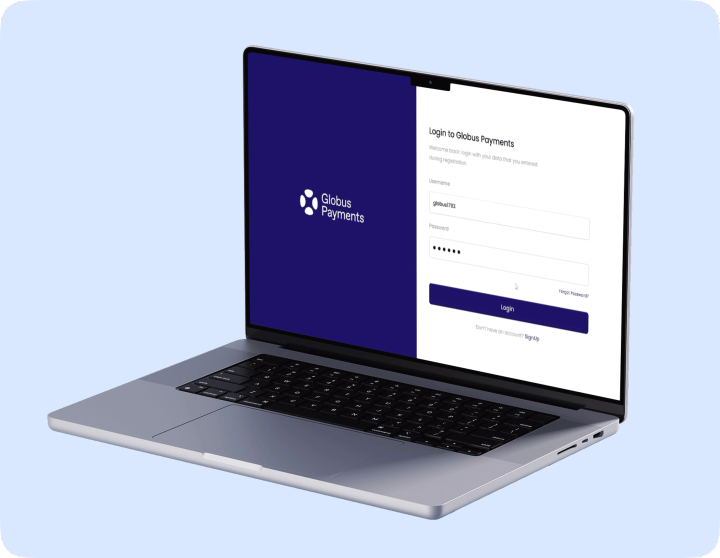
That's why our FinTech development starts with the integration map. For Globus Payments, an EMI-licensed payment company in London, that meant building API integrations with banks and financial service providers.

What We Build

Custom FinTech Software Solutions We Build

These are the FinTech software development solutions we're asked for most. Each one has its own hard part, usually in the data or the integrations, so that's where each description below starts.

  • Digital Banking Platforms

    We build accounts, transactions, onboarding and reporting for neobanks and established banks alike. What makes digital banking hard is keeping the ledger accurate when it depends on core banking systems and payment rails you don't control. So we design reconciliation and failure handling before the first customer-facing screen.

    Learn more
  • Payment Processing Systems

    We build online, recurring and cross-border payment flows with routing, settlement and fraud checks. Globus Payments, an EMI-licensed payment company serving the logistics sector, has had us as its technology partner from the start. We built the API integrations with banks and financial service providers that its payment infrastructure runs on.

    Learn more
  • Digital Wallets

    We build custodial and non-custodial wallets for fiat and digital assets, on web and mobile. What makes a digital wallet trustworthy is key management and transaction integrity: every transfer completes fully or not at all, and private keys never sit where they shouldn't.

    Let's talk
  • Trading Platforms

    We build trading platforms with real-time market data, order execution and portfolio views that hold up under load. Ampang, the AI crypto trading bot we built with reinforcement learning, runs on Kafka, Redis Streams and WebSockets: the streaming foundations a trading platform needs when a stale price costs real money.

    Learn more
  • Wealth Management Software

    We build portfolio tracking and personal finance dashboards across accounts and asset types. The real work in wealth management software is data accuracy: pulling positions and transactions from several sources, reconciling them and showing one figure the user can rely on.

    Let's talk
  • Crypto Exchanges

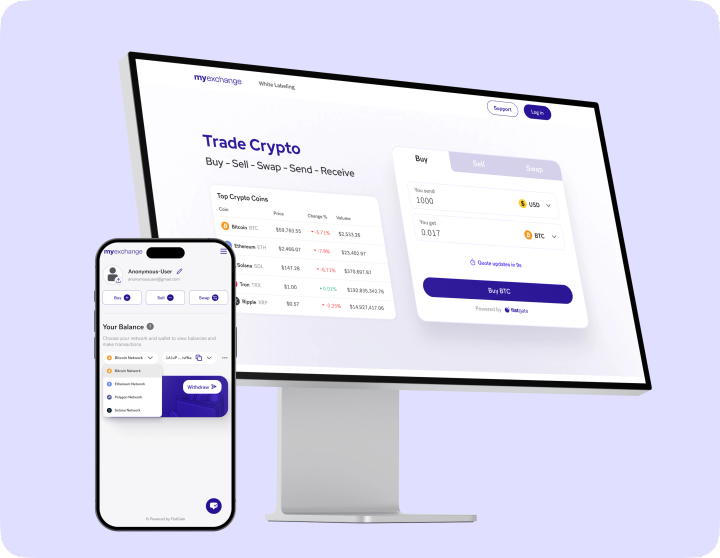
    We build centralised, decentralised, hybrid, P2P and OTC crypto exchanges, with trading engines, wallet integrations and liquidity management. With FiatGate, a white-label non-custodial exchange we built, the exchange itself was the payment infrastructure.

    Learn more
  • Blockchain Applications

    We build smart contracts, dApps, DeFi products and tokens on Ethereum and Solana. Mbilia, an NFT marketplace for digital art, runs on both. We build blockchain applications around a real use case and connect them to the financial systems they sit in.

    Learn more
  • KYC and Onboarding Systems

    Identity verification, document checks and AML screening sit inside the onboarding flow itself. Onboarding is where many FinTech products lose users, so we design KYC and onboarding systems that cover the checks your regulator expects without sending a new customer back to the start.

    Learn more
  • Lending Platforms

    We can build lending platforms covering loan origination, eligibility checks and repayment logic, connected to credit data and payment providers. The challenge is keeping eligibility rules auditable, and easy to change when your credit policy does.

    Let's talk
  • Insurance Software

    We can build insurance software too: customer portals where policyholders view their policy and start a claim, with personal data handled securely and a clean connection to your policy administration system.

    Learn more

What Our FinTech Development Services Cover

Our FinTech development services cover every stage, from the first scoping session to running the platform after launch. The same team stays on the work throughout, so nobody has to re-learn your product between phases. That continuity is what we mean by end-to-end FinTech software services.

Product Discovery

Product discovery turns an idea or a brief into a scope we can build against: requirements, architecture, the integrations it depends on and the regulations that apply. You leave with a plan that says what gets built first and why, before you commit any development budget.

MVP Development

A FinTech MVP should prove the core ledger and payment logic, and the rest of the roadmap can wait. We scope MVP development around that core and connect KYC and banking rails early, because retrofitting them after launch costs far more than building them in.

Systems Integration

Systems integration connects your product to core banking, payment processors, card issuing, KYC and AML providers and open banking APIs, in real time or in batches. We build for the day a provider changes its API or goes down, so a failure upstream never becomes a wrong balance in your system.

Backend Development

Business logic, transaction processing, validation and orchestration live in the backend, so front ends stay light and rules stay in one place. Backend development is where FinTech products earn or lose their reliability, which is why we treat it as the centre of the build.

Web and Mobile Apps

We build web and mobile apps for iOS, Android and the browser in React and React Native. We make security visible without letting it get in the way: strong authentication that doesn't drive users away, and onboarding that explains why a document is needed.

AI Integration

AI integration earns its place in fraud detection, automated KYC checks and trading models, as Ampang shows. We agree which decisions a model may take on its own and where a person stays in the loop, because in regulated finance you'll have to explain every decision.

FinTech software development dashboard
Compliance

How We Build Compliance Into FinTech Software

Compliance costs least when it's mapped before the first sprint and built into the architecture. Leave it until just before an audit and it gets expensive. We build FinTech software to the frameworks that apply to your product. Your licence, your audits and any certification stay with you and your auditors. Our job is to build software that gives them what they need to check.

Compliance Mapped Before the First Sprint

In discovery we work out which PSD2, GDPR, PCI DSS, KYC and AML rules apply to your product and where each control lives in the architecture. That map shapes the build, so compliance-ready FinTech software development isn't a clean-up job at the end.

Security Controls in Every Layer

We build in encryption in transit and at rest, strong customer authentication, role-based access and audit trails that record who did what and when. Each security control sits in the layer where it belongs, so one weak screen can't give anyone a way around the rest.

Resilience Under DORA and FCA Rules

DORA has applied to EU financial entities and their ICT providers since January 2025, and UK firms work to the FCA's operational resilience rules. In software terms, resilience means monitoring, incident handling, failover and documented dependencies.

Our Process

Our End-to-End FinTech Development Process

Our end-to-end FinTech development process settles compliance, integrations and team fit before development picks up speed, and the team stays on after launch. You can start within weeks, not months.

Step 1: Discover & Define - Process illustration
Step 2: Assemble Elite FinTech Teams - Process illustration
Step 3: Design, Develop & Deliver - Process illustration
Step 4: Nurture & Evolve - Process illustration
Build your team
Technologies

Our FinTech Software Development Tech Stack

We choose technology for transaction integrity, real-time data and clean integrations. Our FinTech software development tech stack centres on React, Node.js, Python, Django, Vue.js and Angular. Kafka, Redis Streams and WebSockets carry the real-time flows. Underneath, it runs on Docker, Kubernetes and AWS, with Solana and Ethereum for blockchain work.

Angular
.NET
C#/C++/C
PHP
Pulumi
Databricks
Flutter
React.js
JavaScript
Docker
Kubernetes
AWS
Angular
.NET
C#/C++/C
PHP
Pulumi
Databricks
Flutter
React.js
JavaScript
Docker
Kubernetes
AWS

What Drives FinTech Software Development Costs

FinTech software development costs depend mainly on compliance scope, integrations and the team model. In custom FinTech software development, three costs catch buyers out most often.

Compliance Retrofitted Late

Adding KYC, audit trails or data residency after launch means reworking code that was built without them. Mapping the rules in discovery costs far less than retrofitting them, which is why we do it first.

Third-Party Provider Fees

KYC checks, payment processing and market data often carry per-call or per-transaction fees. They grow with every user, so we weigh provider fees while choosing providers and designing flows, before the first invoice arrives.

Security Audits You Didn't Plan

Banks, partners or regulators often require penetration tests and security reviews before launch. Plan time and budget for security audits from the start, and build the software so an auditor finds the evidence they're looking for.

FinTech software development team reviewing costs
FiatGate white-label crypto exchange, custom FinTech software built by Prostrive

Custom FinTech Software or a White-Label Platform?

A white-label platform or an established provider is often the faster and safer route. If a platform already does most of what your product needs, buying gets you to market sooner and leaves PCI DSS scope, uptime and upgrades with someone else. As a custom FinTech software development company, we'll tell you when that's the better choice.

Custom FinTech software pays off when you need control over the product, better economics at high volume, or flows no platform supports. That was the case with FiatGate: the exchange itself was the payment infrastructure, so there was nothing to buy. If you do build, owning the code matters. With us, the code and IP are yours.

Many products end up in between, with a platform core and custom layers around it. In that case, check who owns those layers and how hard it is to leave the platform later.

Choosing a Partner

How to Choose a FinTech Software Development Company

Choosing a FinTech software development company comes down to six checks that separate a FinTech specialist from a general development firm. It helps to get the term straight first: a FinTech development company builds financial software for other businesses, while a FinTech company runs its own product. We're not the right fit if price is your only criterion, or if you want a black box rather than a team.

Ask How They Map Regulation Before Building

Ask which rules apply to your product and where each control will live. A partner who can't answer before building will answer during your audit. We map PSD2, GDPR, PCI DSS, KYC and AML in discovery and show you the result.

Test How Their Code Handles a Failing Integration

Ask what happens when a payment provider times out halfway through a transfer. The answer shows engineering maturity better than any portfolio. Ours starts with operations that are safe to retry, plus reconciliation, so a retry never pays twice.

Look for FinTech Cases With Real Integrations

Ask for cases where the partner had to connect to banks, card issuers or exchanges. Ours include Globus Payments, with API integrations to banks and financial service providers, and Axys, which links crypto exchange APIs to card issuing.

Check Who Owns the Code and IP

Some vendors keep the code or license it back to you, so check the contract before you sign. With us, the code and intellectual property belong to you under all our standard contracts, whichever collaboration model you choose.

See How Their Team Works Inside Yours

Remote teams fail on communication before they fail on code. Our developers join your standups and Slack channels, with Western management on site in our hubs. Every team also gets cultural workshops and communication training.

Make Sure You Can Scale Without Lock-In

Your roadmap will change, so your team size should be able to follow it. Check that this flexibility is written into the contract. We work without long-term contracts, so you scale up or down when your product needs it.

Collaboration Models for FinTech Development

Our collaboration models for FinTech development differ in who directs the day-to-day work and who's responsible for delivery. Ownership stays the same: in every model, the code and IP are yours.

Dedicated Teams

This is a team that works only on your product and takes direction from you. Dedicated Teams fit a long-running, regulated FinTech platform where domain knowledge and continuity matter most.

Team-as-a-Service

You get a flexible team that we manage, for when you need FinTech capacity quickly and don't want to oversee developers yourself. With Team-as-a-Service, you set the priorities and we run the team.

Project-Based Development

We take a clearly scoped build from concept to deployment, such as an MVP or a specific integration, and we're accountable for delivering it. Project-Based Development suits a defined brief with a clear outcome.

Global Reach

Established in 2021. Our team spans 4 countries (The Philippines, The Netherlands, Hong Kong, Armenia), delivering 100+ transformative projects across the world.

Team

Meet Our FinTech Software Developers

Our FinTech software developers have built payment, banking, trading and crypto systems, and they work as part of your team. They join your standups and Slack channels, while Western management on site in our hubs keeps quality and communication consistent. You can start within weeks, not months.

Ace
Ace
Wordpress Developer
Anton
Anton
Full Stack Developer
Arvin
Arvin
Lead Developer
Bea
Bea
Full Stack Developer
Celyn
Celyn
Full Stack Developer
Christian
Christian
Full Stack Developer
Our Work

Trusted by companies we've helped grow

A selection of the products our embedded teams have helped build.

View all case studies

Plan Your FinTech Build in a Discovery Call

In a Discovery call, we look at your scope, the integrations and compliance work it implies, the collaboration model that fits, and whether a custom build or a platform suits you better. You'll leave with an honest read, whatever you decide.

FAQs

Frequently Asked Questions About FinTech Software Development