Wealth Management Software Development Services

We build custom wealth management software for wealth managers, private banks and WealthTech startups across Europe: portfolio tracking, client portals and personal finance dashboards that bring every account and asset type into one view. As part of our FinTech software development services, we start where wealth platforms usually break, with the data, so advisers and clients can trust the figure on the screen.

Let's talk

Wealth Management Software Starts With Reliable Data

A wealth platform is only as good as the number it shows. Positions and transactions arrive from custodians, banks, brokers and crypto exchanges, each with its own format, timing and corrections. When those feeds disagree, advisers go back to their spreadsheets and clients stop logging in.

That's why we treat custom wealth management software development as a data problem first. We reconcile every source before it reaches a dashboard, so a portfolio value, a return or a fee is one figure everyone can rely on.

What We Build

Wealth Management Software We Build

Most wealth platforms combine several of the modules below. We build them as one connected system, so a client portal shows the same holdings as the adviser view behind it. Order execution and trade settlement stay with your custodian or broker: our wealth management software connects to them rather than replacing them.

  • Portfolio Tracking Software

    Portfolio tracking software gives advisers and clients one view of holdings across accounts, custodians and asset classes, with allocation, performance and cash updated as new data arrives. We design the data model so a position reported by two sources counts once, and so a late correction never leaves a performance figure quietly wrong.

    Let's talk
  • Client Portals and Investor Apps

    A client portal lets investors check their portfolio, documents and reports without emailing their adviser for every update. We build portals for the web and investor apps for iOS and Android in React and React Native, with strong authentication that protects the account without turning every login into a chore.

    Let's talk
  • Personal Finance Dashboards

    Personal finance and budgeting apps bring spending, savings and investments together for people who manage their own money. Our personal finance dashboards categorise transactions, track savings goals and show net worth across every connected account, so the picture a user sees matches what their bank and broker hold.

    Let's talk
  • Account Aggregation

    Account aggregation pulls balances, positions and transactions from banks, brokers and custodians into one dataset. We can connect through open banking APIs where a provider supports them and through direct or file-based feeds where it doesn't, then normalise and reconcile the data before anything reaches a screen.

    Let's talk
  • Digital Client Onboarding

    Opening a wealth account means identity checks and a risk profile before the first investment. Our digital client onboarding flows run KYC checks through your chosen provider, capture each client's objectives and risk tolerance in a structured form, and keep the evidence your compliance team will ask for later.

    Let's talk
  • AI Assistants for Advisers

    AI assistants and LLM integrations can draft meeting summaries, answer questions about a client's holdings and prepare a first version of a portfolio review. They work on your own client data behind access controls, and we agree with you which outputs an adviser must check before anything reaches a client.

    Let's talk
  • Digital Asset Integration

    Clients who hold crypto want to see it next to the rest of their portfolio. We connect wealth platforms to crypto custody, exchange APIs and fiat on- and off-ramps, so digital assets appear in the same views and reports. For Axys, which offers card solutions to high-net-worth individuals, we delivered the web development behind its card platform with crypto top-up.

    Let's talk

How We Build Wealth Management Platforms

Wealth management software holds some of the most personal data there is: assets, income, family situation and long-term plans. Regulators also expect firms to explain every recommendation and every fee. So three things shape the architecture of every wealth platform we build, before the first screen is designed.

Reconciliation in the Data Layer

Every incoming position and transaction is matched against its source before it updates a portfolio. When custodian feeds disagree or arrive late, the platform flags the break instead of guessing, so your operations team fixes the data once rather than explaining a wrong statement afterwards.

Regulation Mapped in Discovery

In discovery we work out which rules apply to your product: MiFID II suitability and cost disclosure, GDPR, FCA rules for UK clients, and KYC and AML checks. Each control gets its place in the architecture, with audit trails that record who changed what. Your licence and audits stay with you; our job is software that gives your auditors the evidence.

Access Control for Client Wealth Data

We encrypt data in transit and at rest, and give advisers, assistants, compliance staff and clients only the access their role needs. A family office user sees the entities they manage, an adviser sees their own clients, and every export or permission change lands in the audit log.

Wealth management software
Choosing a Partner

How to Choose a Wealth Management Software Development Partner

Most vendors can show a polished dashboard. What separates a wealth management software development company you can rely on is what happens behind it: how it handles messy data, who owns the result and whether its team fits yours. These are the questions we'd ask in your position, with our own answers.

Ask Whether You Should Build at All

If an established wealth platform covers most of your workflow, buying it gets you live sooner and leaves upgrades and uptime with the vendor. Custom software pays off when your client experience is the product, your workflow doesn't fit a platform, or you need data no vendor exposes. We'll tell you honestly which side you're on.

Test How They Handle Conflicting Data

Ask what happens when two custodians report different values for the same holding. A partner who has built financial software will talk about reconciliation rules, break reports and audit trails. Our answer starts with matching every record to its source, so a disagreement gets flagged instead of averaged away.

Look for Cases With Real Financial Integrations

Ask for projects where the partner connected to banks, card issuers or exchanges, not just built screens. Ours include Globus Payments, where we built API integrations with banks and financial service providers, and Axys, where crypto exchange APIs meet card issuing for high-net-worth clients.

Check Who Owns the Code and IP

Some vendors keep the code or license it back to you. With us, the code and intellectual property of your wealth platform belong to you under all our standard contracts, so you can take development in-house or switch partners later without rebuilding what you paid for.

See How Their Developers Work Inside Your Team

Remote teams usually fail on communication before they fail on code. Our developers join your standups and Slack channels, with Western management on site in our hubs, and every team also gets cultural workshops and communication training.

Make Sure You Can Scale Without Lock-In

A wealth platform grows in phases: a first release for one client segment, then new products, markets and integrations. We work without long-term contracts, so your team can grow or shrink with your roadmap, and new developers join your tools alongside the existing team.

Our Process

Our Wealth Management Software Development Process

Our wealth management software development process runs in four steps. The same team stays with your product from the first workshop to the releases after launch, so nobody has to relearn your data between phases.

Step 1: Discover & Define - Process illustration
Step 2: Assemble Elite WealthTech Teams - Process illustration
Step 3: Design, Develop & Deliver - Process illustration
Step 4: Nurture & Evolve - Process illustration
Build your team
Technologies

Tech Stack for Wealth Management Software

We choose technology for data accuracy, real-time updates and clean integrations. Our wealth management software runs on React, Node.js, Python, Django, Vue.js and Angular, with React Native for investor apps. Kafka, Redis Streams and WebSockets carry live prices and position updates, and the platform runs on Docker, Kubernetes and AWS.

Angular
.NET
C#/C++/C
PHP
Pulumi
Databricks
Flutter
React.js
JavaScript
Docker
Kubernetes
AWS
Angular
.NET
C#/C++/C
PHP
Pulumi
Databricks
Flutter
React.js
JavaScript
Docker
Kubernetes
AWS

Collaboration Models for Your Wealth Platform

How you work with us depends on what you already have: an in-house product team that needs more capacity, or a clear brief you want built end to end. All three models come with the same developers and the same ownership terms for your wealth platform.

Dedicated Teams

Dedicated Teams work only on your wealth platform and take direction from you. This model fits a long-running product, where knowledge of your data, custodians and client segments builds up over time and continuity matters most.

Team-as-a-Service

With Team-as-a-Service you get a flexible team that we manage. You set the priorities and we run the team, which suits firms that need WealthTech capacity quickly without overseeing developers themselves.

Project-Based Development

We take a clearly scoped build from concept to deployment, such as a client portal, an onboarding flow or a first release for one client segment, and we're accountable for delivering it.

Global Reach

Established in 2021. Our team spans 4 countries (The Philippines, The Netherlands, Hong Kong, Armenia), delivering 100+ transformative projects across the world.

Our Work

Trusted by companies we've helped grow

A selection of the products our embedded teams have helped build.

  • Globus

    Globus Payments

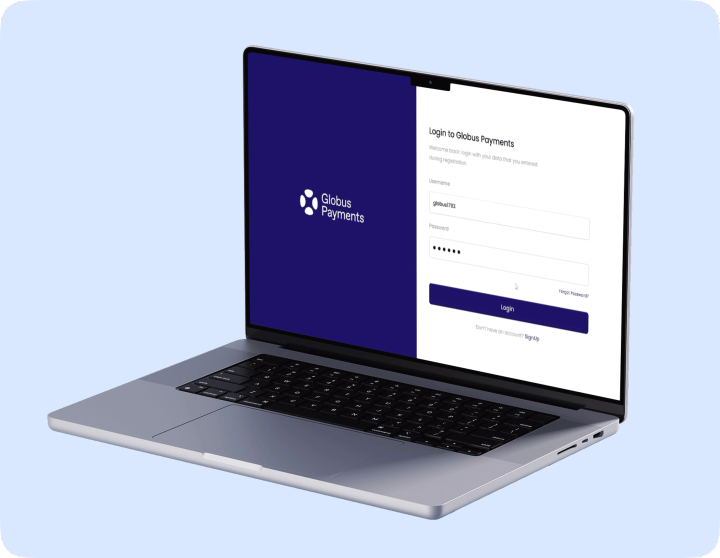
    Globus Payments is a London-based provider of EMI-licensed payment solutions for the logistics sector. Our team built the API integrations that connect its payment services to its clients' systems.

    Read the case study
  • Ampang

    Ampang

    Ampang is an AI crypto trading bot built for cross-exchange trading in volatile markets. Its real-time pipelines run on Kafka, Redis Streams and WebSockets and connect to Binance, Coinbase Pro and Kraken through rate-optimised APIs.

    Read the case study
  • Fiatgate

    FiatGate

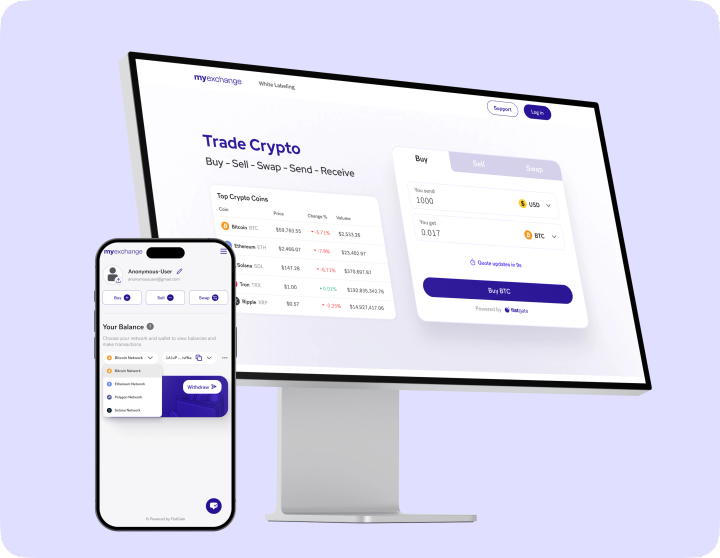
    FiatGate is a white-label platform that lets businesses launch their own branded, non-custodial crypto wallet and exchange. We built the complete platform in JavaScript, with third-party APIs for wallet management and exchange functionality.

    Read the case study
View all case studies

Discuss Your Wealth Management Platform

Tell us what you want to build or fix, from a client portal to a full wealth platform. In a Discovery call we go through your data sources, the rules that apply and the first release, so you know what it takes before you commit any budget.

FAQs

Frequently Asked Questions About Wealth Management Software Development