Core Banking Software Development Services

Core banking software development means building, replacing or modernising the system that runs your ledger, accounts and transactions. Every app, card and payment you offer depends on it. Of all our banking software development work, this leaves the least room for error. We build custom core modules, implement vendor cores and move banks, EMIs and FinTechs off legacy cores in phases, keeping live balances correct throughout. The code we write is yours.

Let's talk

What Core Banking Software Development Covers

A core banking system is a bank's system of record. It keeps the general ledger, opens and maintains accounts, applies product rules such as interest and fees, and posts every transaction in real time. Your mobile app, cards, payment rails and reporting all read from it.

Developing core banking software therefore means one of three jobs: a custom ledger or product engine, a vendor core configured and connected to your estate, or a phased move off a legacy core that still runs the business.

Our Services

Our Core Banking Software Development Services

Core banking work ranges from a single module to a full replacement, and the route you take shapes risk, cost and pace more than any feature list. If a vendor core or a Banking-as-a-Service provider covers what you need, we'll tell you buying is the better choice.

  • Core Banking Architecture

    Before any code is written, we design how your core holds data and moves money: the account and ledger model, the events that flow between services, and how channels, payment schemes and reporting connect. These choices decide whether the core keeps up when volumes, products or markets grow, so we settle them with your engineers and risk team first.

    Let's talk
  • Custom Core Development

    Custom core banking software makes sense when your product model is what sets you apart and no platform supports it without heavy workarounds, for example accounts that hold fiat and crypto balances in one ledger. You get full control and own the code, but you also carry the maintenance and the regulatory evidence, so we only recommend it where the advantage is real.

    Let's talk
  • General Ledger Development

    We build double-entry general ledgers in which every movement posts as matching debits and credits, with idempotent postings so a retried payment never books twice. Sub-ledgers per product and currency, end-of-day processing and reconciliation against bank statements and scheme files mean your finance team can close the books without manual corrections.

    Let's talk
  • Account and Product Engine

    Current accounts, savings, e-money accounts and loans each follow their own rules for interest, fees, limits and statements. We build the account and product engine so those rules live in configuration instead of code. A new account type or a pricing change then goes through testing and release, not through a rewrite of the core.

    Let's talk
  • Vendor Core Implementation

    A vendor core such as Mambu, Thought Machine or Temenos fits when you offer standard banking products and speed to market matters most. It brings its own ledger and product engine, so we take on the work the vendor leaves to you: configuring products, building extensions, connecting channels and payment schemes, and migrating your data. Licence fees and the vendor's roadmap become part of your plan.

    Let's talk
  • Legacy Core Modernisation

    Many mainframe cores written in COBOL still post transactions reliably; the trouble is how slowly they take on new products. We modernise a legacy core in steps: first an API layer around it, then products or customer groups moved to the new core one at a time. You avoid a big-bang switch, at the cost of running and reconciling two cores until the old one is retired.

    Let's talk
  • Core Data Migration

    Data migration is where most core projects carry their risk. We map every account, balance, transaction history and product rule from the old core to the new one, run trial migrations on anonymised copies of production data, and reconcile the results before any cut-over, so every balance has been checked before a customer sees it.

    Let's talk
  • Core Banking API Layer

    An API layer gives your channels, partners and open banking providers controlled access to accounts, balances and transactions without touching the core directly. We design core banking APIs with versioning, rate limits and audit logging, so new products can move quickly while the core stays the single source of truth.

    Let's talk

How We Build Core Banking Software

Customers never see the three things a core banking system is judged on: whether every balance is correct, whether the data meets the rules and whether the system keeps running when a component fails. Those three drive our architecture choices from the first sprint, long before anyone discusses screens or features.

Balances That Are Right at Every Moment

A core can't be accurate only at end of day. We combine double-entry postings, idempotency keys and event streaming with Kafka or Redis Streams, so a timeout or a retry never creates a second booking and every balance can be rebuilt from its transaction history.

Compliance in the Data Model

PSD2, GDPR and PCI DSS decide where account and card data live, who may see them and what gets logged. We build audit trails, access control and retention rules into the core banking system itself, and connect your KYC and AML monitoring providers through defined interfaces instead of side processes.

Resilience You Can Evidence

FCA and PRA operational resilience rules, and DORA in the EU, expect important services to stay within impact tolerances. We run core services in containers on Kubernetes, test failover and recovery, and write the documentation your risk team needs to show how the core holds up under stress.

Core banking software
Choosing a Partner

What to Look for in a Core Banking Development Partner

Core banking software development leaves little room for mistakes, because they end up in your customers' balances. These are the questions we'd ask any partner or team before handing over the core, including us.

Have They Connected to Live Ledgers and Payment Schemes?

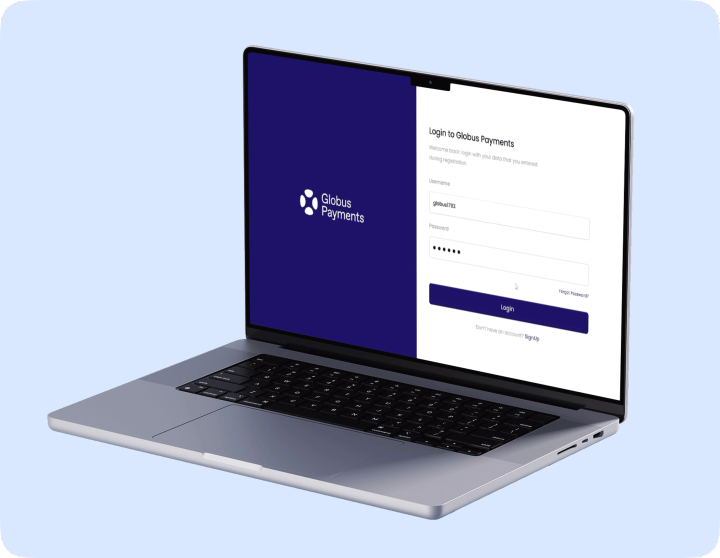
Ours have, and connecting to a running bank is the hard part. Our engineers built the API integrations that link Globus Payments, an EMI-licensed payment company in London, to its clients' systems, and delivered the web development behind the Axys card platform for high-net-worth clients.

Will They Tell You Not to Build?

We will, because a team that only builds will always recommend building. We advise buying when a vendor core or Banking-as-a-Service provider covers your need, and keep custom development for the parts of your core that actually set your bank apart.

Can They Work Inside Your Change Control?

Ours can. Every change to a core goes past a change advisory board, a security review and an agreed release window, and our engineers work within that, with only the access each task needs and a ticket and code review behind every change. Your auditors can trace who changed what in the core and why.

Who Owns the Code and IP?

You should, and with us you do: our standard contracts give you the code and intellectual property of every custom build, without a long-term commitment. That keeps the core yours to scale, hand to another team or bring in-house.

Do Their Engineers Join Your Team?

Our engineers sit in your standups and Slack channels, under Western on-site management in our hubs and with cultural and communication training. On a core project, that means a question about a posting rule gets raised in the sprint, not discovered in testing.

Our Process

Our Core Banking Development Process

Core banking development projects go wrong when the route is chosen late or migration is treated as the final step. Our process puts both at the start.

Step 1: Discover & Define - Process illustration
Step 2: Assemble Elite Core Banking Teams - Process illustration
Step 3: Design, Develop & Deliver - Process illustration
Step 4: Nurture & Evolve - Process illustration
Build your team
Technologies

Technologies Behind Our Core Banking Work

We build new core banking services with Node.js, Python and Django, run them in Docker containers on Kubernetes in AWS, and move events between them with Kafka and Redis Streams. Many existing cores are written in COBOL or Java. We connect to them through APIs and message queues instead of rewriting code that still does its job.

Angular
.NET
C#/C++/C
PHP
Pulumi
Databricks
Flutter
React.js
JavaScript
Docker
Kubernetes
AWS
Angular
.NET
C#/C++/C
PHP
Pulumi
Databricks
Flutter
React.js
JavaScript
Docker
Kubernetes
AWS

Collaboration Models for Core Banking Projects

A core programme runs in phases, and the right model can change between them: a defined project for an API layer or one migration wave, then a team for the longer run.

Dedicated Teams

Prostrive engineers who report to your own tech lead and work as part of your department. This model suits banks and FinTechs that already have strong technical leadership and need more hands on the core, without permanent hires.

Team-as-a-Service

Our leads run planning and delivery; you decide what gets built first. It suits a vendor core implementation or a modernisation programme while your own engineers are busy keeping the bank running.

Project-Based Development

A fixed scope we deliver from discovery to deployment. It works for core banking work with clear edges, such as a general ledger module, an API layer around a legacy core or one migration wave.

Global Reach

Established in 2021. Our team spans 4 countries (The Philippines, The Netherlands, Hong Kong, Armenia), delivering 100+ transformative projects across the world.

Our Work

Trusted by companies we've helped grow

A selection of the products our embedded teams have helped build.

  • Globus

    Globus Payments

    Globus Payments is a London-based provider of EMI-licensed payment solutions for the logistics sector. Our team built the API integrations that connect its payment services to its clients' systems.

    Read the case study
  • Axys Holding

    Axys

    Axys provides card solutions for high-net-worth individuals, with crypto top-up of the card balance. We delivered the web development behind the platform.

    Read the case study
  • Fiatgate

    FiatGate

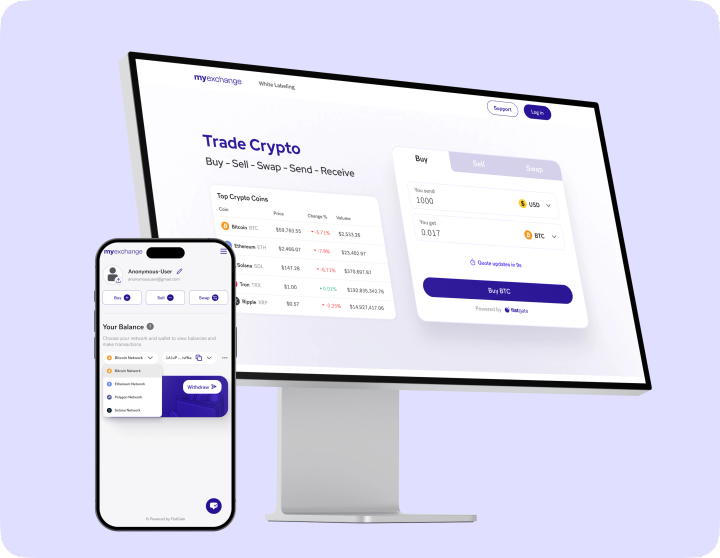
    FiatGate is a white-label platform that lets businesses launch their own branded, non-custodial crypto wallet and exchange. We built the complete platform in JavaScript, with third-party APIs for wallet management and exchange functionality.

    Read the case study
View all case studies

Plan Your Core Banking Project

Book a Discovery call and tell us about your current core, the products it has to support and any regulatory deadline you're working towards. We'll come back with the route we'd take, a first phase and the team setup that fits.

FAQs

Frequently Asked Questions About Core Banking Software Development