Payment Gateway Development Services

We design and build custom payment gateways for PSPs, EMIs, platforms and high-volume merchants whose payment flows have outgrown a standard integration. We cover authorisation, tokenisation, routing and settlement, with PCI DSS in scope from day one, and you own everything we build.

Let's talk

When a Custom Payment Gateway Is Worth Building

A custom payment gateway is worth building when a standard PSP integration starts costing you margin, control or product flexibility. That usually comes down to four situations: processing fees at your volume outweigh the cost of running your own gateway, you need to route across several acquirers, your flows don't fit a PSP's model, or you're launching as a PSP, EMI or payment facilitator yourself.

If none of those apply, integrating an established provider is faster and safer, and we'll tell you so in the first conversation.

Build, Integrate or White-Label Your Payment Gateway

The right route depends on how much control over routing and card data you need, and how much compliance and certification work you're prepared to carry. Each route strikes a different balance between the two, so it pays to decide before any payment gateway development starts.

Build a Custom Payment Gateway

Payment businesses and platforms choose this when their volume or flows justify owning the stack. You control routing, data and the checkout. In return, you carry the full weight of PCI DSS scope, acquirer certification and ongoing maintenance.

Integrate an Existing PSP

This is the right route for most businesses. Stripe, Adyen or a similar PSP handles processing and much of the compliance burden, so you can take payments quickly. The trade-off is that you work within their rules, pricing and payment methods.

White-Label a Gateway Platform

This route is for companies that want to offer payments under their own brand without building the core. You start faster and own the merchant experience, but the processing engine and its roadmap stay with the platform vendor.

Add a Payment Orchestration Layer

If you already work with several PSPs, an orchestration layer routes each transaction to the best provider and gives you failover. You gain control over routing, while processing and the rails underneath stay with your PSPs.

Payment gateway development dashboard
What We Build

Payment Gateway Software We Build

A payment gateway is a set of modules that have to agree with each other on every transaction. The checkout screen is rarely where projects go wrong. The risk sits in settlement reconciliation and the token vault, where a design flaw turns into money you can't account for or audit scope you didn't plan for. These are the modules we build, as part of our FinTech software development work.

  • Transaction Routing Engine

    The routing engine sends each authorisation request to the right acquirer or PSP based on card type, currency, cost or availability. When an acquirer is slow or down, failover logic reroutes the transaction without losing its state, so a single outage doesn't stop you taking payments.

    Let's talk
  • Tokenisation Vault

    Tokenisation replaces card numbers with tokens that are useless outside your system. The vault is the only place real card data lives, which keeps the rest of your platform out of PCI DSS scope and lets you take repeat payments without storing cards anywhere else.

    Let's talk
  • Settlement Reconciliation

    Reconciliation checks that what was authorised matches what the acquirer actually settled. Design it late and it fails silently: transactions look fine while the books drift apart. We make retries idempotent, so a repeated request never charges a customer or settles a payment twice.

    Let's talk
  • Fraud Screening

    Fraud screening scores each transaction for risk in real time and decides whether to approve it, decline it or send the cardholder through a 3D Secure challenge. Tuned well, it catches suspicious patterns while keeping false declines low, because every legitimate payment you block is lost revenue.

    Let's talk
  • Multi-Currency Payment Methods

    A gateway for European customers needs more than cards. It supports digital wallets, bank transfers such as SEPA, local methods like iDEAL and pricing in multiple currencies, with conversion logic that makes clear which currency a merchant is paid out in.

    Let's talk
  • Merchant Onboarding

    If merchants process through your gateway, you need to check them before their first transaction. Onboarding flows handle identity verification, risk assessment and the KYC and AML checks, and only activate a merchant once those checks pass.

    Let's talk
  • Recurring Billing

    Subscriptions and instalments depend on stored payment credentials and sensible retry logic. Recurring billing schedules the charges, retries failed payments at intervals that give them a real chance to succeed, and keeps the customer's payment details up to date.

    Let's talk
  • Merchant Dashboard

    The merchant dashboard is where your merchants or finance team see transactions, refunds and settlement status. Clear reporting here cuts support questions and manual spreadsheet work, and gives auditors a trail they can follow.

    Let's talk

Payment Gateway Integration Services

Most of the work in a gateway project sits in its connections rather than its core. Our payment gateway integration services connect your gateway to acquirers, PSPs and the systems you already run, through documented REST APIs and SDKs.

Acquirer Connections

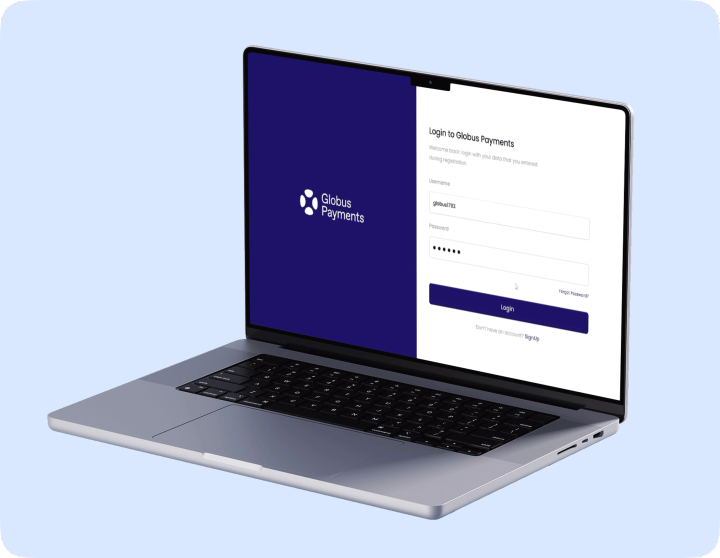
Every acquirer has its own message formats, settlement files, fee handling and chargeback process. For Globus Payments, an EMI-licensed payments company in London, complex API integrations with banks and financial service providers were central to the platform.

PSP Abstraction Layer

An abstraction layer keeps your gateway logic independent of any single PSP. You can add a provider, switch one off or move volume between them without rewriting the core, which also strengthens your position when you renegotiate fees.

Existing System Integration

Your gateway has to exchange data with the platforms you already run, from ERP and accounting to e-commerce and core banking. API-first design keeps that payment gateway API integration predictable for your own developers.

Engineers working on a payment gateway integration
Compliance

Compliance Built Into Your Payment Gateway

Compliance decisions shape a payment gateway's architecture, so they belong before the first line of payment code rather than after testing. Retrofitting tokenisation or network segmentation into a finished system costs far more than designing it in. We build to the requirements of PCI DSS, PSD2 and GDPR from the start, which makes your own assessments simpler.

PCI DSS Scope From the First Sprint

Where card data flows decides your PCI DSS scope. Tokenisation and network segmentation keep the cardholder data environment small, so fewer systems need assessing under PCI DSS v4. PA-DSS was retired in 2022 and replaced by the PCI Secure Software Standard.
Strong Customer Authentication With 3DS2

Strong Customer Authentication applies to most online card payments in the EU under PSD2 and in the UK under rules overseen by the FCA. 3DS2 meets that requirement with risk-based checks: most transactions pass without a challenge, and only riskier ones ask the cardholder to confirm.

GDPR-Compliant Transaction Records

PCI DSS expects you to keep transaction records, while GDPR gives customers the right to erasure. Tokenising card data and pseudonymising references in transaction logs keeps the audit trail intact and limits what an erasure request has to touch.

Scope

What Shapes the Scope of Your Gateway Build

Published estimates for payment gateway development vary widely because they describe different projects: integrating a PSP, building a gateway or becoming a payment facilitator. The cost and time of your gateway build follow from six factors, and a Discovery call pins them down for your case before anyone puts a number on it.

  • Number of Acquirer Connections

    Each acquirer or PSP brings its own formats, test environment and certification. One connection is a contained piece of work. Three acquirers with failover between them is a different project, because routing, settlement and reconciliation logic have to handle all three.

  • Payment Methods at Launch

    Cards alone are the simplest start. Every wallet, bank transfer or local method you add brings its own flow, refund rules and reconciliation. Launching with the methods your customers actually use, and adding the rest later, keeps the first release focused.

  • Your PCI DSS Level

    Service providers that process more than 300,000 card transactions a year fall under PCI DSS Level 1 and need an annual assessment by a Qualified Security Assessor. Your expected volume, and how much of your platform touches card data, decide how much security architecture and evidence the build has to deliver.

  • Acquirer Certification

    Before you go live, acquirers and card schemes test your gateway against their specifications. That certification can't run in parallel with development, because it only starts once the integration works. Plan for it from the start and a technically finished gateway won't sit waiting for approval.

  • Routing or Holding Funds

    A gateway that only passes authorisation requests to acquirers is a technical service. Once you hold or move customer funds, you enter regulated territory: an EMI or payment institution licence, or a payment facilitator arrangement with a sponsoring acquirer, supervised by the FCA in the UK or a national regulator in the EU. That choice belongs with your legal advisers, and it changes what the gateway has to support.

  • Reconciliation at Volume

    You can check a few hundred transactions a day by hand, but not thousands an hour. The higher your expected volume, the more the build has to cover: automated matching, asynchronous settlement processing and alerts when the numbers don't add up.

Our Process

How We Deliver Payment Gateway Development

Every step in our payment gateway development process produces something you can check before the next one starts, from a compliance scope at the outset to a monitored gateway after launch.

Step 1: Discover & Define - Process illustration
Step 2: Assemble Elite Payment Gateway Teams - Process illustration
Step 3: Design, Develop & Deliver - Process illustration
Step 4: Nurture & Evolve - Process illustration
Build your team

Working Models for Payment Gateway Projects

Which model fits depends on who owns your payment roadmap. None of them ties you to a long-term contract, so you can scale the team up or down as your payment gateway moves from build to operation.

Dedicated Teams

Your CTO leads the roadmap and manages a team that works only on your payment gateway. It suits long-term ownership, where knowledge of your flows and acquirers builds up inside a stable team.

Team-as-a-Service

We manage delivery with an on-demand team and payment expertise on call, so you get experienced oversight without managing developers yourself. It's a good fit if you don't have a large engineering organisation of your own.

Project-Based Development

When the scope is fixed, such as a single acquirer integration or a defined gateway release, we take it from concept to deployment as one project with an agreed scope.

Why Prostrive

Why Prostrive for Payment Gateway Software Development

The biggest risk in a payment gateway project is dependence: on a PSP, and on the partner who builds your gateway. As a payment gateway software development company, we remove the second one, so you keep control over the system your revenue runs through.

Payment Infrastructure We Have Grown With Since Day One

Getting a regulated payments business live needs a partner who stays. We've been the technology partner of Globus Payments since its inception. For this EMI-licensed payments company in London, which serves logistics, we built the API integrations and compliant onboarding flows.

You Own the Code, Vault and Routing Logic

Handing over a gateway you can't run without us would only swap one dependency for another. You own the code and the intellectual property we build, including the tokenisation and routing layer, under every standard contract.

Western On-Site Management at Every Hub

Remote teams stall when nobody on site owns quality and communication. Western managers at each of our hubs oversee delivery, and our engineers take part in cultural workshops and communication training.

Engineers Inside Your Standups and Slack

A gateway built out of sight is hard to maintain afterwards. Our engineers sit in your standups and Slack channels and work to your roadmap, so knowledge of how your payment flows work stays inside your team.

Our Work

Trusted by companies we've helped grow

A selection of the products our embedded teams have helped build.

  • Globus

    Globus Payments

    Globus Payments is a London-based provider of EMI-licensed payment solutions for the logistics sector. Our team built the API integrations that connect its payment services to its clients' systems.

    Read the case study
  • Fiatgate

    FiatGate

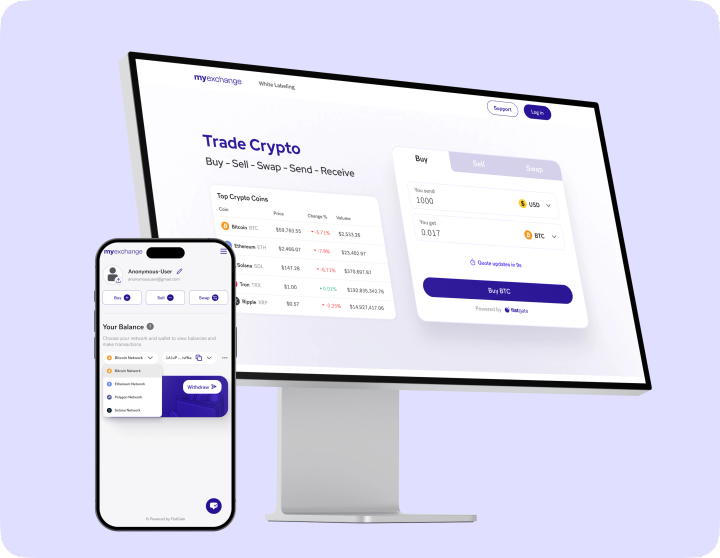
    FiatGate is a white-label platform that lets businesses launch their own branded, non-custodial crypto wallet and exchange. We built the complete platform in JavaScript, with third-party APIs for wallet management and exchange functionality.

    Read the case study
  • Axys Holding

    Axys

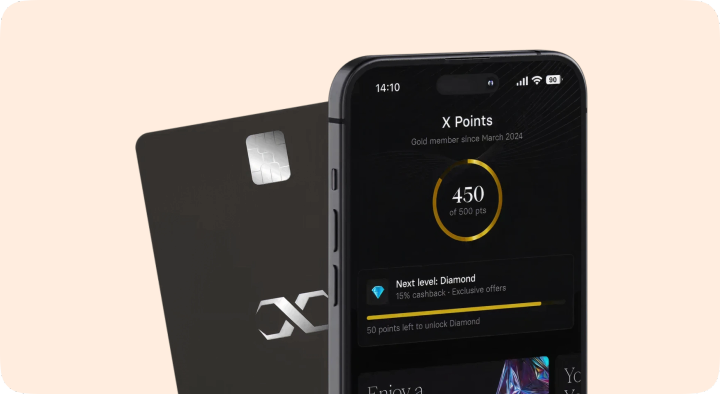
    Axys provides card solutions for high-net-worth individuals, with crypto top-up of the card balance. We delivered the web development behind the platform.

    Read the case study
View all case studies

Plan Your Payment Gateway Discovery Call

In a Discovery call we go through your volumes, acquirers and compliance scope. You'll leave knowing whether building, integrating or orchestrating fits your business, even if the honest answer is to integrate a PSP rather than build a payment gateway.

FAQs

Frequently Asked Questions About Payment Gateway Development