Blockchain App Development Services

Prostrive builds end to end blockchain apps: the smart contracts that run your product's core logic on-chain, and the web or mobile app your users actually open. We work with startups and scale-ups across Europe, and we bring the same rigour from our FinTech blockchain development work to every Web3 product, from NFT marketplaces to token launchers.

Let's talk
What We Build

The Blockchain Apps We Build

We build decentralised apps, smart contracts, mobile apps, wallets, exchanges, NFT marketplaces, DeFi products and token tools, and we add blockchain features to apps that already exist. Each of these has its own hard part, and that's where most of our planning goes.

  • Decentralised Apps (dApps)

    The hard part of a dApp is rarely the smart contract. It's the moment a user has to connect a wallet, approve a transaction and wait for it to confirm. We build the web front end and the contracts behind it together, and we design those wallet steps so people who've never used crypto don't give up halfway.

    Let's talk
  • Smart Contract Development

    In a blockchain app, the smart contract is the back end, and it often holds real money. We keep each contract focused on one job, test it thoroughly and plan an independent audit before launch. Token standards such as ERC-404 are part of the work, and so is deciding which logic belongs on-chain at all.

    Let's talk
  • Mobile Blockchain Apps

    Plenty of people will only ever see your product on their phone. We build mobile blockchain apps for iOS and Android, usually cross-platform with React Native or Flutter, with wallet connections, transaction signing and notifications that feel like any other app on the home screen.

    Let's talk
  • Crypto Wallet Apps

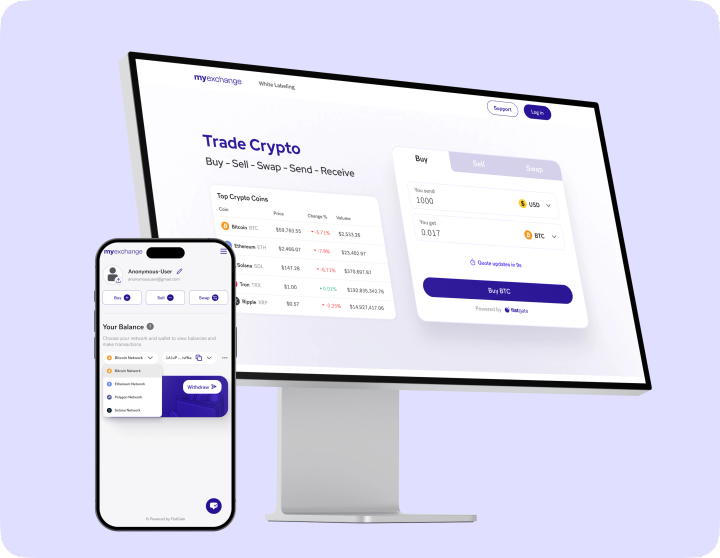
    A crypto wallet starts with one decision: who holds the keys. Custodial and non-custodial wallets lead to different onboarding, different security work and a different split of compliance duties, so we settle that before anything else. FiatGate, the white-label non-custodial wallet and exchange we built, came out of exactly that choice.

    Learn more
  • Crypto Exchange Platforms

    Our crypto exchange platform work covers centralised, decentralised, hybrid, P2P and OTC exchanges. The trading screen is the part people see. Custody, withdrawal approvals, order handling and compliance reporting are the parts that decide whether an exchange stays up and stays trusted once real volume arrives.

    Learn more
  • NFT Marketplaces

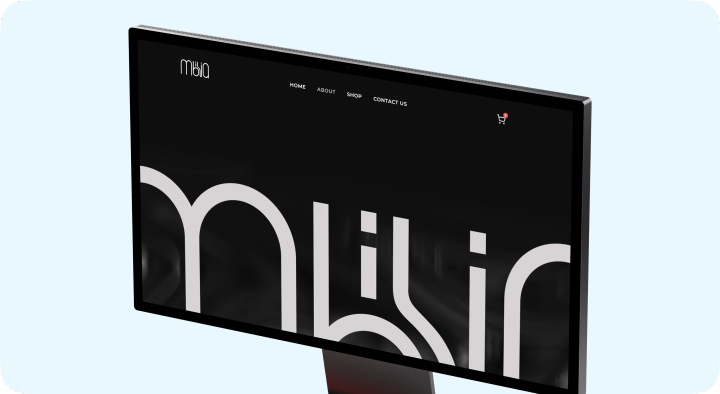
    An NFT marketplace lives or dies on minting, listings and how easily people can pay with the wallet they already use. For Mbilia, we built a marketplace for digital art with live auctions, wallet integration and support for both Ethereum and Solana, so collectors weren't tied to a single chain.

    Let's talk
  • DeFi Applications

    In DeFi, the contract logic is the product and the risk at the same time. Lending, staking and swap features move value without anyone in the middle, so a small mistake in a calculation or a permission gets expensive fast. That's why our DeFi contracts stay narrow, get tested heavily and go through an audit before real funds go in.

    Let's talk
  • Token Creation and Launch Tools

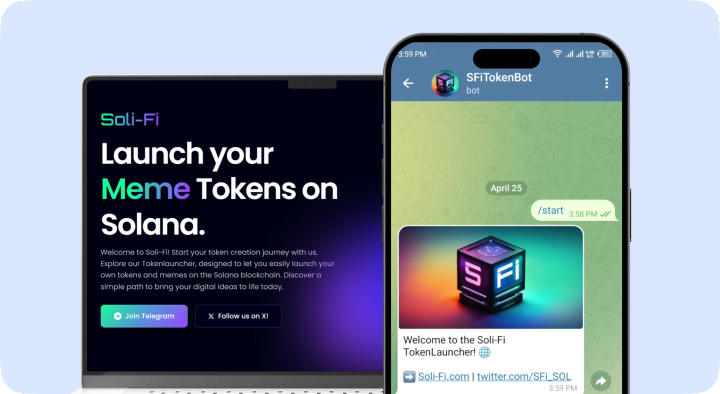
    Launching a token shouldn't need a developer on standby. We build custom tokens and the tools around them, from minting and supply settings to the launch flow itself. Soli-Fi is a good example: a Telegram bot we built that lets people create and launch their own Solana tokens in a few steps, without writing any code.

    Let's talk
  • Blockchain in Existing Apps

    You don't have to rebuild a working product to add blockchain to it. We add crypto payments, fiat on- and off-ramps and wallet connections to existing web and mobile apps, using regulated providers where that's the sensible route, and we leave the rest of your stack as it is.

    Let's talk

How We Build Blockchain Apps That Hold Up

Whether a blockchain app holds up comes down to three choices: the chain it runs on, how its smart contracts are tested, and how it deals with European rules. We make all three before the first line of production code, because once contracts are live and users hold assets on them, changing course gets slow and expensive.

Choosing Between Ethereum and Solana

Ethereum and Solana are the two chains we build on, and the right choice depends on your product. Ethereum has the widest choice of wallets, tools and liquidity. Solana is built for high throughput and low fees, which suits apps with lots of small transactions. We weigh your users, transaction volume and fees, and some products end up running on both.

Smart Contracts Tested Before Launch

Once a smart contract is deployed, you can't just patch it, so the checking happens before launch. We test the contracts, plan an independent audit of them and run penetration tests on the app around them, while issues are still easy to fix. After launch, monitoring carries on.

Compliance Designed for European Rules

If your app offers crypto services to EU users, you'll need MiCA authorisation. We design KYC and AML checks, Travel Rule data and record-keeping into the app, and personal data stays off-chain, since GDPR gives people the right to have their data erased and data on a blockchain can't be. The licence and legal advice stay with you and your lawyers.

Blockchain app development

Only What Needs a Blockchain Goes On-Chain

We put on the blockchain only what genuinely needs to be there: ownership, balances and the rules nobody should be able to change quietly. Everything else, from user profiles to search and notifications, runs in a normal backend, where it's faster, cheaper and easier to change.

Most blockchain products struggle on the parts around the chain, not the chain itself, which is why this split shapes your blockchain app development more than any other decision. And if your product doesn't need a blockchain at all, we'll say so and build it the simpler way.

Why Prostrive

Why Choose Prostrive as Your Blockchain App Development Company

Choose Prostrive if you want one partner for the whole product, full ownership of everything we build, and FinTech habits applied to anything that moves money. In practice, that comes down to five things.

One Team for the Chain and the App

Smart contract developers, backend engineers, app developers and UI/UX designers work as one team, in your standups and your Slack channels. Nobody hands a contract over the wall to another vendor, so the contracts and the app are designed around the same user journey.
You Own the Code and the Smart Contracts

Everything we build for you is yours: the code, the smart contracts and the intellectual property. That holds under Dedicated Teams, Team-as-a-Service and Project-Based Development alike, so you can take the product in-house or to another partner whenever you choose.

FinTech Depth for Apps That Move Money

Most blockchain apps move money, so we approach them as FinTech products. We built Axys, a card platform with crypto top-ups, and FiatGate, a white-label wallet and exchange, so security reviews, compliance data and clean audit trails are routine for us, not a last minute extra.

Western On-Site Management

Western managers work on-site in our hubs and keep quality on track. Our developers also take part in cultural workshops and communication training, which means fewer misunderstandings and less explaining things twice.

No Long-Term Contracts

There's no long-term contract to sign. You scale the team up for a launch and back down once things settle, without lock-in. And when you're ready to go, a team can start within weeks, not months.

Our Process

Our Blockchain App Development Process

Our blockchain app development process puts the expensive decisions first. Whether you need a chain, what goes on it and which one you use are settled in step one, and testing and audits happen before launch, while fixing things is still cheap.

Step 1: Discover & Define - Process illustration
Step 2: Assemble Elite Blockchain Teams - Process illustration
Step 3: Design, Develop & Deliver - Process illustration
Step 4: Nurture & Evolve - Process illustration
Build your team
Technologies

Our Blockchain Tech Stack

Our blockchain tech stack keeps the specialist parts on-chain and uses mainstream tools around them, so your next hire already knows most of it. On-chain components run on Ethereum or Solana. Web front ends are built in React and Next.js, mobile apps in React Native or Flutter, and services in Node.js and Python. Kafka, Redis Streams and WebSockets carry live data such as prices and transactions, while Docker, Kubernetes and AWS let the app scale as usage grows.

Angular
.NET
C#/C++/C
PHP
Pulumi
Databricks
Flutter
React.js
JavaScript
Docker
Kubernetes
AWS
Angular
.NET
C#/C++/C
PHP
Pulumi
Databricks
Flutter
React.js
JavaScript
Docker
Kubernetes
AWS

Ways to Work With Our Blockchain Developers

You can work with our blockchain developers in three ways, depending on how much of the build you want to manage yourself.

Dedicated Teams

A team of blockchain, backend and app developers that works only on your product and takes direction from you. It suits a long-running product, where the team needs to know your contracts and your users inside out.

Team-as-a-Service

A flexible team that we manage for you. You set the goals, we handle planning and the day-to-day, and specialists join when the work calls for them, for example ahead of an audit.

Project-Based Development

You bring a clear brief, such as a token platform or an NFT marketplace, and we deliver the whole thing from concept to deployment against an agreed scope and timeline.

Global Reach

Established in 2021. Our team spans 4 countries (The Philippines, The Netherlands, Hong Kong, Armenia), delivering 100+ transformative projects across the world.

Our Work

Trusted by companies we've helped grow

A selection of the products our embedded teams have helped build.

  • Fiatgate

    FiatGate

    FiatGate is a white-label platform that lets businesses launch their own branded, non-custodial crypto wallet and exchange. We built the complete platform in JavaScript, with third-party APIs for wallet management and exchange functionality.

    Read the case study
  • Soli-Fi

    Soli-Fi

    • AI Chatbot
    Read the case study
  • Mbilia

    Mbilia

    • Web Development
    • UI/UX Design
    Read the case study
View all case studies

Plan Your Blockchain App With Us

Book a Discovery call and tell us what you want to build. We'll look at whether and where a blockchain fits, what should live on-chain and how we'd approach your first release.

FAQs

Frequently Asked Questions About Blockchain App Development