Crypto Banking Software Development
We build crypto banking software for banks, EMIs, FinTech companies and crypto businesses that want fiat and crypto in one regulated product. It's a specialist part of our FinTech software development, delivered by a dedicated team that works inside your organisation. You own the code.
Let's talk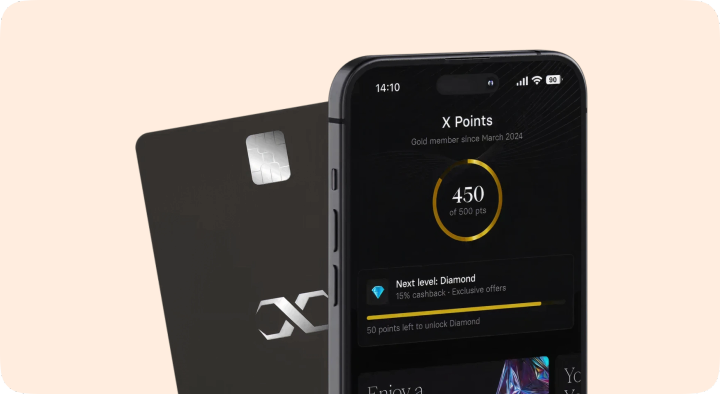
What Is Crypto Banking Software?
Crypto banking software is a single system where fiat accounts and crypto assets sit side by side. Customers hold euros or pounds next to bitcoin or stablecoins, and can convert, send and spend them. It combines a digital bank, a crypto exchange and a wallet with the controls a regulated financial business needs.
Some vendors describe a crypto bank as one that only handles cryptocurrency, with no fiat at all. In practice, cryptocurrency banking almost always works the other way round. The value is in connecting the two, so card payments, bank transfers and crypto transfers all run from one account.
That connection is also what separates crypto banking from ordinary digital banking. A bank transfer settles through clearing systems, while a crypto transfer settles on a blockchain around the clock and can't be reversed. Banks safeguard deposits and crypto platforms safeguard private keys. And the rulebook for crypto services is still being written.
Most of the engineering effort goes into something customers never see: one accurate record of every balance across bank rails and blockchains.

Why Banks and FinTech Companies Add Crypto Banking Software
Banks and FinTech companies add crypto banking software to keep customers who already hold crypto, rather than watching those balances drift off to exchanges. Offering fiat and crypto in one account keeps the customer relationship, the data and the fee income in-house.
Speed is the second driver. Stablecoin and crypto transfers settle around the clock and across borders, without waiting for correspondent banks or clearing cut-off times. That makes crypto rails useful for international payments, even for customers who never hold crypto for long.
The same infrastructure opens up new revenue. Conversion fees, custody services and crypto-funded cards add income streams to the customer base you already have. The trade-off is a heavier compliance and security load, which is why the software has to be built around the ledger, custody and regulation.

Adding Crypto to an Existing Bank or Launching a Crypto-First Product
The same components serve two very different crypto banking projects. Which one you're running shapes the architecture before anyone writes a line of code.
When a bank or EMI adds crypto, the new services have to fit around what's already there. That means a core banking system that stays the ledger of record for fiat, plus existing KYC, payment rails, reporting and a licence. So the job is closer to custom banking software development than a new build, and most of the effort goes into the integration points.
A FinTech company launching a crypto-first product starts at the other end, and so does a crypto business adding IBANs and cards. With no legacy to work around, we can design the ledger, custody model and compliance tooling together in the first sprint. The risk shifts to scope: deciding what the first version really needs and what can wait until the licence and the customers arrive.
What We Build Into Your Crypto Banking Platform
We build a complete crypto banking platform, or just the components your stack is missing. Every component below connects to the same ledger and the same compliance layer, which keeps the platform auditable as it grows.
-
One Ledger for Fiat and Crypto Balances
The ledger is the core of a crypto banking platform. Every fiat and crypto balance, fee and conversion has to reconcile against bank statements on one side and on-chain data on the other. Separate books for fiat and crypto tend to fall apart at the first audit, so we design one ledger that accounts for every balance.
Let's talk -
Multi-Asset Customer Accounts
Customers see their fiat currencies and crypto assets in one account view, with one transaction history. Behind that view, each asset and customer segment gets its own limits, fees and permissions. So a retail customer and a business client can use the same crypto banking software under different rules.
Let's talk -
Custody Infrastructure
Custody is where customer assets are actually protected. We build custodial wallets, private key management, multi-signature setups, hot wallets for daily operations, cold storage for reserves and hardware security modules. If you'd rather use a licensed custody provider, we integrate that provider into the platform instead.
Let's talk -
Fiat On-Ramps and Off-Ramps
We build fiat on-ramps and off-ramps ourselves, and integrate existing payment, exchange and ramp providers over SEPA, SWIFT and card networks. Most edge cases in a crypto banking platform live here: a conversion that fails halfway, a returned bank transfer, a transfer held for screening. Each one needs a defined path through the ledger, so nobody has to fix it by hand.
Let's talk -
Crypto Payment Flows
Crypto payment flows move value between customers, merchants and external wallets, including stablecoin transfers where your product uses them. Every transfer is screened and recorded before it settles, because once a crypto payment is on chain, you can't call it back. We also build and integrate crypto payment gateways. Merchant flows usually need a fiat leg too, which is where payment gateway development comes in.
Learn more -
Card Issuing with Crypto Top-Up
Letting customers spend crypto balances with a card is work we've already taken into production. For Axys, we built a card platform that lets high-net-worth individuals top up their cards with crypto. That work touches the card programme, the conversion flow and the ledger all at once.
Let's talk -
Access to Crypto Exchanges
To let customers buy and sell crypto inside your platform, we connect it to exchange and liquidity providers through their APIs. Running your own trading venue is a separate project, since cryptocurrency exchange development comes with its own trading engine and liquidity management.
Learn more -
Compliance Tooling Inside the Platform
We build compliance tooling into the transaction flow of the crypto banking software from the start. AML screening and blockchain transaction monitoring run through integrated specialist tools, while onboarding draws on our KYC software development work. Travel Rule data goes with each transfer, and flagged transactions stop before they settle. Your compliance team works from the same data as the ledger.
Learn more -
Integration with Your Core Banking System
Through APIs, the crypto layer reads from and writes to your existing core banking, payment and CRM systems. Customer data and balances stay consistent on both sides. You don't have to replace what already works just to add crypto services.
Learn more -
Back-Office Tools for Your Operations Team
Operations and compliance staff get role-based access to customers, transactions, fees, limits and reports. Most incidents in a crypto banking operation are resolved in the back office, which is why we give these tools the same attention as the front end.
Let's talk -
Customer Apps for Web and Mobile
The customer-facing crypto banking app for web, iOS and Android runs on the same APIs as the rest of the platform. We build it with React, React Native or Flutter, depending on your team and your existing products.
Learn more
Custodial, Non-Custodial or Hybrid Crypto Custody
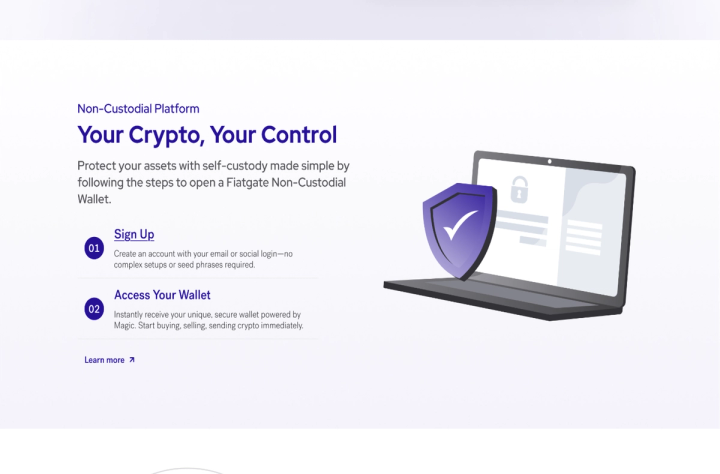
Who holds the private keys is the first design decision in crypto banking software, and it comes before any architecture work. In a custodial model the institution holds the keys for its customers, and in a non-custodial model customers hold their own. A hybrid model splits the two, for example by product or by asset.
Holding keys for customers makes you a custody provider in the eyes of the regulator. Safeguarding, segregation and recovery obligations come with that role. Leaving keys with customers lightens the load, but if a customer loses access, your support team can't simply step in.
FiatGate, the white-label wallet and exchange platform we built, is non-custodial by design for exactly this reason. Its partners offer crypto services without holding customer assets. The right custody model depends on your business model and licence, which is why we map it in the first phase of every project.

Crypto Banking Software Built Around MiCA and the FCA Regime
European and UK regulation now shapes crypto banking software from the first sprint. In the EU, MiCA has applied to crypto-asset service providers since 30 December 2024. The transitional period for existing providers ended across the EU on 1 July 2026 at the latest.
Since that same date in December, the EU Transfer of Funds Regulation has applied the Travel Rule to crypto transfers. Originator and beneficiary information now has to travel with each transfer.
In the UK, the FCA is accepting authorisation applications from cryptoasset firms between 30 September 2026 and 28 February 2027. The new regime comes into force on 25 October 2027.
For the build, that means complete audit trails, Travel Rule data on every transfer and client assets kept segregated in the ledger. It also means reporting your compliance team can produce on request, and clear governance over who can change what. Software that can't produce the records a regulator asks for will hold up the very licence it's meant to support.
The licence and the relationship with the regulator stay with your company. We build the crypto banking software that your application and your compliance team rely on.
White-Label or Custom Crypto Banking Software?
A white-label crypto banking platform is the faster route when your product is close to a vendor's standard feature set. If speed to market matters more than anything else, a white-label vendor may suit you better than we do. We don't sell a white-label crypto banking platform of our own.
Custom crypto banking software pays off when your product has to stand apart from what everyone else can license. It also makes sense when the platform has to work around an existing core banking system, or when your roadmap can't depend on a vendor's release schedule. With a custom build you own the code and the IP, so the platform stays yours.
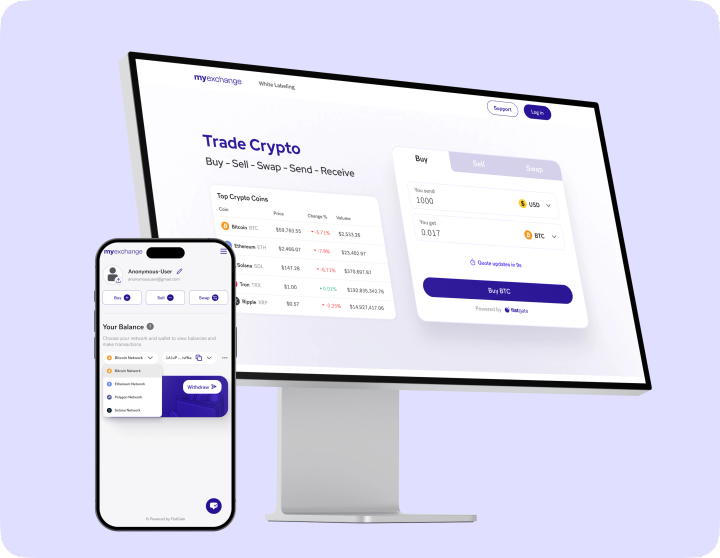
A third route is building your own white-label product to sell to others. That's what we did with FiatGate, a white-label, non-custodial wallet and exchange platform that partners and resellers launch under their own brand. We handled the complete development in JavaScript, using third-party APIs for wallet management and exchange functionality.
How We Build Crypto Banking Software with You
Our process starts with regulation and custody, before anyone designs a screen. A dedicated team works alongside your compliance and core banking people, so you never get handed a black box.
-
Discover and define. We run a regulatory assessment and a blockchain feasibility analysis, and map out compliance obligations, custody requirements and technical scope before development starts.
-
Assemble your team. We put together a dedicated team with experience in blockchain platforms, custody systems and regulated financial environments. The team joins your standups, tools and communication channels, while Western on-site management in our hubs oversees quality.
-
Design, develop and deliver. Security testing runs continuously while we build the platform in iterations. At regular intervals, we align engineering, compliance and business priorities.
-
Support and evolve. After launch, the team stays on to maintain the platform and extend it as your product grows.
You can work with us through Dedicated Teams, Team-as-a-Service or Project-Based Development. There are no long-term contracts, and the team scales up or down with the platform.

Maintenance and Support for Your Crypto Banking Platform
A crypto banking platform needs active maintenance after launch, because the rules, the networks and the volumes around it keep changing. The same team that built it stays on to monitor, maintain and extend it.
Regulation is the first reason. When requirements change, as they will when the UK regime comes into force in October 2027, reporting and controls have to change with them. Blockchain networks also upgrade their protocols, so node connections, custody and monitoring need to keep up with each upgrade.
Growth is the second reason: rising transaction volumes call for performance monitoring and scaling before customers notice delays. New assets, chains and providers mean new integrations and new features. Security updates run through all of it, because a crypto banking platform is always a target.
Crypto and Payments Platforms We've Built
We've already built and shipped the hardest parts of a crypto banking platform for clients.
-
FiatGate
A white-label, non-custodial wallet and exchange platform that partners and resellers launch under their own brand.
Read the case study -
Axys
A crypto card platform that lets high-net-worth individuals top up their cards with crypto.
Read the case study 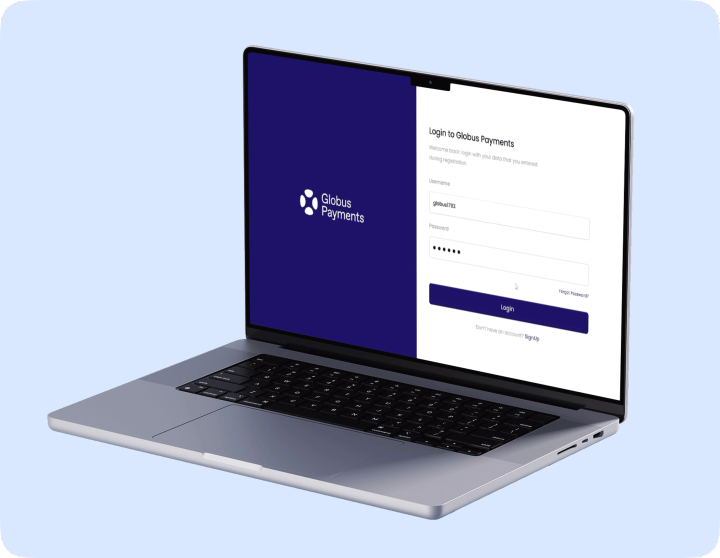
Globus Payments
EMI-licensed payment infrastructure built for the logistics industry in London.
Read the case study
None of these is a complete crypto bank, and we don't present them as one. Together they cover the custody choice, the card programme and the licensed payment flows a crypto banking platform is built on.
View all case studiesPlan Your Crypto Banking Platform in a Discovery Call
In a Discovery call, we look at your licence situation, your custody model and your existing stack. Together we work out what your crypto banking platform needs first. It's a conversation between people who build products, from co-founders to co-founders, and it ends with a clear next step.
Frequently Asked Questions About Crypto Banking Software
The cost of building crypto banking software depends on scope, but the main drivers are clear from the start. They include the custody model, the number of blockchains and assets, core banking integration, the providers you connect and the reporting you need. A crypto layer for an existing bank and a crypto-first product are very different projects, so we map these drivers in a Discovery call.
The timeline of a crypto banking software project follows the same drivers as the cost, plus your licence path. Firms applying for FCA or MiCA authorisation usually plan the build around the application, because regulators expect to see the controls already in place. Each external provider adds its own testing and onboarding, so we draw up a plan once the scope and licence path are clear.
No, we don't obtain MiCA or FCA licences on behalf of clients. The licence and the relationship with the regulator stay with your company. We build the audit trails, transaction monitoring, ledger safeguarding and reporting your compliance team and legal advisers need to show the regulator.
Several programming languages usually work together in crypto banking software, each in its own layer. We use Node.js or Python for backend services, smart contracts where the product needs them, and React, React Native or Flutter for web and mobile apps. Event streaming runs on Kafka or Redis Streams and deployment on Docker, Kubernetes and AWS. The final choice follows your team's own stack.
Crypto banking software can connect to most public blockchains through node access or an integration provider, and our own builds include Ethereum and Solana. Every extra chain adds work beyond the connection, because custody, monitoring and reconciliation all have to support it. That's why we advise starting with the chains your customers actually need.
A crypto banking platform needs security at every layer, with private keys at the top of the list, because a stolen key means assets you can't recover. That means hardware security modules, multi-signature wallets and cold storage, plus multi-factor authentication and role-based access for users and staff. Encryption in transit and at rest, continuous security testing and live monitoring cover the rest.
Yes, crypto banking software can handle high transaction volumes when the architecture is designed for it from the start. That takes event streaming with Kafka or Redis Streams and containerised services on Kubernetes. It's the stack behind Ampang, an AI crypto trading bot we built. The ledger is usually the first bottleneck, so we give its design the most attention when you expect volumes to grow.
You own the code behind your crypto banking software. With a custom build from Prostrive, the code and the intellectual property belong to you under Dedicated Teams, Team-as-a-Service and Project-Based Development alike. There are no long-term contracts, and you can scale the team or take the work in-house whenever it suits your roadmap.
Yes, crypto banking software can integrate with an existing core banking system through APIs. The crypto layer reads and writes balances, customer data and transactions, so both systems stay consistent. Your core banking system usually stays the ledger of record for fiat, while the crypto ledger reconciles against it.
Yes, we can build a white-label product that you license or resell under your partners' brands. FiatGate is an example: a white-label, non-custodial wallet and exchange platform that partners and resellers launch under their own brand. You own the code, so you decide where the product and its roadmap go.
Yes, our dedicated team works side by side with your in-house developers and compliance people. The team joins your standups, tools and communication channels, with Western on-site management overseeing quality. We align compliance priorities at regular intervals during development, so regulatory questions get answered while the code is being written.