Mobile Banking App Development Services

We build mobile banking apps for banks, neobanks and FinTech companies, whether it's a first release or the rebuild of an existing app. As an extension of our custom banking software development, our teams connect iOS and Android apps to your core banking, identity and payment systems. Work with us as an embedded team or on a defined project.

Let's talk

Banking App Development Starts Behind the Screen

Banking app development is won or lost behind the screens, in the connections to your core banking system, KYC providers, payment rails and card issuer. Some apps run on a Banking-as-a-Service (BaaS) provider for the licensed banking layer. Correct balances, settled payments and smooth onboarding come down to integration.

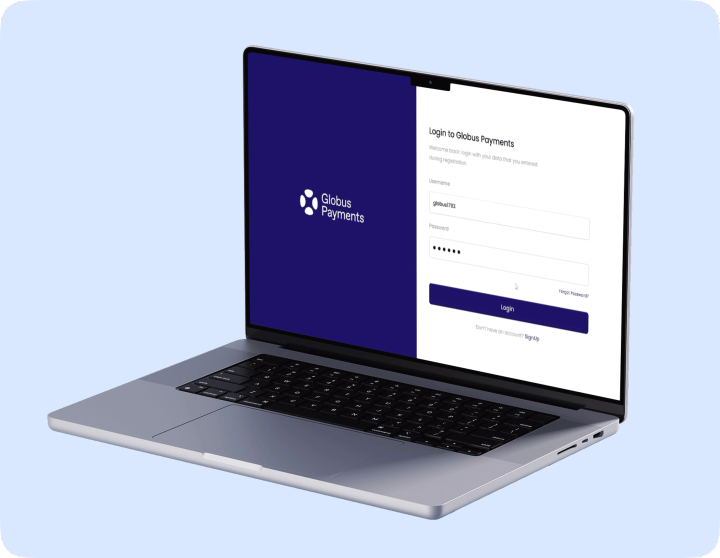
Much of our FinTech software development work is just that: building and maintaining the API integrations behind an app. We did the same for Globus Payments, an EMI-licensed payment provider in London. Kafka, Redis Streams and WebSockets keep live balances and notifications true to the ledger.

What Our Mobile Banking Development Services Cover

Our mobile banking development services cover design, development, integration and support after launch. You can use each one on its own in an existing digital banking app or as part of a full build.

UI/UX Design for Banking Apps

Good banking UX removes steps from the tasks customers repeat every week, such as checking a balance or paying someone new. Our UI/UX design team works from user research, clickable prototypes and a design system that keeps every screen consistent. Accessibility is part of the brief from the first wireframe.

Custom App Development for iOS and Android

We build the app and the backend it depends on as one product, cross-platform or native. Releases go out in small steps, so you see working software early and often.

Core Banking and Third-Party Integration

We connect the app to your core banking system through APIs and middleware, without replacing what's already running. KYC providers, payment rails, card issuers and open banking APIs plug into the same layer.

AI Features That Earn Their Place

AI belongs in a banking app where it solves a real problem: fraud signals on transactions, spending insights and chatbots for routine support questions. Our FinTech AI development team builds machine learning and LLM-based features into your existing app and backend.

Modernising or Replacing an Existing Banking App

We rebuild the replacement app in stages alongside the live one and move customers across in groups. That way, any issues show up in a small group before they reach your whole customer base. Saved payees and payment history move across too, so nobody starts from scratch.

Support and Maintenance After Launch

After launch we monitor performance, fix issues and keep the app up to date with new operating system versions and app store requirements. The same team adds features and integrations as your roadmap and regulation change.

Mobile banking app development dashboard
App Types

Types of Custom Mobile Banking Solutions We Deliver

We deliver custom mobile banking solutions for incumbent banks, digital-first banks and FinTech companies. The type of app decides which integrations, features and regulations come first.

  • Retail Banking Apps

    Retail banking apps cover the daily basics: balances, transfers, card management and statements. For an established bank, the hard part is usually connecting to a core system that was never built for mobile.

    Let's talk
  • Challenger and Neobank Apps

    For a digital-first bank, the app is the whole bank. Onboarding, instant payments and in-app support have to work from day one, often on top of a BaaS provider.

    Let's talk
  • Business and Corporate Banking Apps

    Business banking apps add multi-user access, approval flows for payments and bulk or recurring transfers. Links to accounting and ERP systems save finance teams from exporting and importing statements.

    Let's talk
  • Budgeting and Personal Finance Apps

    Personal finance apps categorise spending, set budgets and move money into savings pots automatically. With open banking APIs, they can show accounts from other banks in one view.

    Let's talk
  • Payment and Wallet Apps

    Payment apps make peer-to-peer transfers, bill splitting, merchant payments and cross-border transactions quick to complete. Card tokenisation lets customers pay with their phone in shops and online.

    Let's talk
  • Investment and Trading Apps

    Investment apps let customers buy stocks, ETFs and funds, follow their portfolio and set up recurring contributions. They're built on the same principles as our trading software development: real-time market data and reliable order handling.

    Learn more
  • Crypto Banking Apps

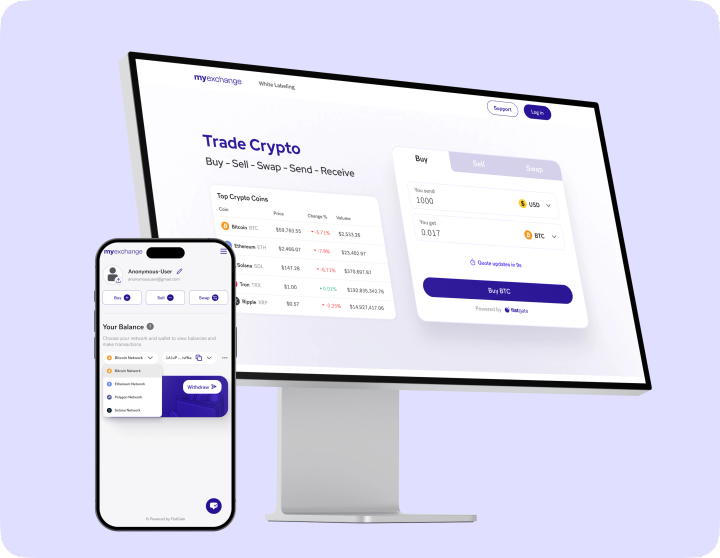
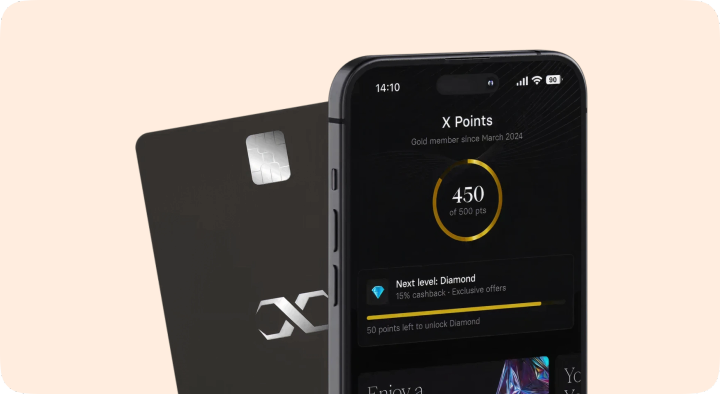
    Crypto banking apps combine fiat accounts and cards with digital asset wallets and exchange features. Our experience here comes from crypto banking software development projects such as FiatGate and Axys.

    Learn more

Don't see your type of app here? Tell us about your project and we'll build it around your goals and technical requirements.

Core Features of a Mobile Banking App

The core features of a mobile banking app fall into six groups. Which ones belong in your first release depends on your customers and the journeys they use most.

  • Onboarding and identity: document and selfie checks through your KYC software, risk scoring and a clear next step when a check fails.

  • Accounts and cards: real-time balances and statements, ordering and cancelling cards, freezing a card and setting spending limits.

  • Payments and transfers: instant domestic and international transfers, standing orders, peer-to-peer payments and Verification of Payee for euro transfers.

  • Security: biometric login, two-factor authentication for high-risk actions and instant notifications for card activity.

  • Support and self-service: in-app chat with AI chatbots and human agents, help articles and a branch or ATM finder.

  • Money management: spending categories, budgets, savings pots, multi-currency accounts and a view of other bank accounts through open banking.

Every payment feature connects to your payment software and reconciles back to the ledger. Verification of Payee has been mandatory for euro-area payment providers since 9 October 2025.

Benefits of a Mobile Banking App for Banks and Customers

A mobile banking app benefits both sides of the relationship. For most customers, it's now the main place where they deal with their bank.

Benefits for Banks

  • New customers: instant account opening and a well-designed app make a bank more attractive to people who compare providers on their phone.

  • Lower cost to serve: routine tasks shift away from branches and call centres into self-service in the app.

  • Better cross-selling: spending and saving patterns show which product fits a customer, and when.

  • Stronger retention: an app customers open every week keeps the bank visible between bigger decisions.

Benefits for Customers

  • Control in real time: customers see every payment as it happens and can freeze a card instantly.

  • Speed: payments, transfers and bill management take seconds instead of a branch visit.

  • Access from anywhere: customers in rural areas or abroad can bank without travelling to a branch.

  • Visible security: alerts and biometric login show customers that their money is protected.

Security and Compliance

Security and Compliance in Mobile Banking Application Development

In mobile banking application development, security and compliance are settled during discovery. Adding them to a finished app means reopening flows that already work. So we plan authentication, data handling and accessibility before anyone designs the first screen.

Strong Customer Authentication Under PSD2

PSD2 requires strong customer authentication for payments: biometrics plus a second factor and device binding. Each payment also needs a code tied to its amount and payee, known as dynamic linking. In the UK, PSD2 applies through the Payment Services Regulations 2017. In the EU, PSD3 is set to replace large parts of PSD2.


Data Protection and Financial Crime Rules

GDPR governs how the app collects and stores personal data, and PCI DSS applies wherever card data passes through your systems. Open banking features follow the standards for secure account access and customer consent. KYC and AML obligations shape onboarding and transaction monitoring, with FCA requirements on top for UK institutions.

Accessibility Under the European Accessibility Act

Since 28 June 2025, the European Accessibility Act has covered mobile banking apps offered to consumers in the EU. That includes UK institutions with EU customers. Designing to the WCAG-based criteria in EN 301 549 from the first screen is much easier than retrofitting an app that's already live.

Choosing a Partner

How Do I Choose a Mobile Banking App Development Company?

Choose a mobile banking app development company for its integration experience, compliance know-how and how its team works with yours. A portfolio of polished screens says far less. Here's what to ask in a first call.

We ask ourselves the same. Our teams bring FinTech, blockchain and AI expertise under one roof and join your standups and Slack channels. Western on-site management and cultural training keep it working, with no long-term contract.

Integration Experience Beyond the Interface

Ask which core banking, KYC and payment providers a partner has integrated with. Then ask how they handle reconciliation when two systems disagree, because a vague answer here usually means problems later.

Compliance Designed In From the Start

Ask when strong customer authentication, audit trails and accessibility come into the plan. If the answer is "during testing", the rework is already scheduled.

Honest Advice on Build Versus Buy

A good partner tells you when a white-label banking app or a BaaS platform fits better than a custom build. They'll also tell you where custom work actually pays off. If every answer is "build it", ask why.

A Team That Works Inside Your Team

Developers should join your standups and Slack channels and work from your backlog, rather than reporting through an account manager. Check who manages them day to day and how they share knowledge with your in-house people.

Outstaffing or Outsourcing

With outstaffing, developers employed by the partner work as part of your team, under your direction and in your tools. Outsourcing hands a defined scope to the partner to deliver. The difference between outstaffing and outsourcing matters most when your product keeps evolving, because a fixed scope rarely survives a changing roadmap.

Freedom to Scale When Priorities Change

Banking roadmaps shift with regulation and funding. Check whether you can scale the team up or down without a long-term contract, and what happens to documentation and knowledge when you do.

Our Process

How We Build a Mobile Banking App: Four Stages

We build a mobile banking app in four stages: map, assemble, design and build, then launch and improve. Each stage ends with something you can review, so progress shows up as working software.

Step 1: Map Your Systems and Regulatory Context - Process illustration
Step 2: Assemble the Right Team - Process illustration
Step 3: Design and Build in Iterations - Process illustration
Step 4: Launch and Keep Improving - Process illustration
Build your team
Technologies

Choosing the Tech Stack for Mobile Banking Software

The first choice in a mobile banking software stack is native or cross-platform. React Native or Flutter give one codebase for iOS and Android. Native pays off when an app leans on device features or platform-specific performance. Your customers and roadmap decide.

Behind the app we use Node.js and Python, plus Kafka, Redis Streams and WebSockets for live balances and notifications. The integration layer sits in that same backend, on Docker, Kubernetes and AWS.

Angular
.NET
C#/C++/C
PHP
Pulumi
Databricks
Flutter
React.js
JavaScript
Docker
Kubernetes
AWS
Angular
.NET
C#/C++/C
PHP
Pulumi
Databricks
Flutter
React.js
JavaScript
Docker
Kubernetes
AWS

Collaboration Models for Your Mobile Banking App

Which collaboration model fits your mobile banking app depends on your starting point. You might be a bank with its own IT team, a fast-scaling FinTech company or a founder with a clearly scoped first release. None of the models ties you to a long-term contract.

Dedicated Teams

A team of dedicated developers works only on your app, under your direction, and builds deep knowledge of your product and integrations over time. Banks and scale-ups with a long roadmap and their own product owners get the most out of this model.

Team-as-a-Service

We manage the team and its delivery while you set the priorities. This works well for organisations that want expert oversight of the build without managing developers themselves.

Project-Based Development

For a clearly defined initiative, we take end-to-end responsibility for design, build and deployment. It suits a first release or a self-contained rebuild with a clear brief.

Global Reach

Established in 2021. Our team spans 4 countries (The Philippines, The Netherlands, Hong Kong, Armenia), delivering 100+ transformative projects across the world.

Team

Meet Our Mobile Banking App Developers

Our mobile banking app developers cover mobile, backend and integration, security, QA and UX. They work inside your tools and rituals and take ownership of the systems they build.

Ace
Ace
Wordpress Developer
Anton
Anton
Full Stack Developer
Arvin
Arvin
Lead Developer
Bea
Bea
Full Stack Developer
Celyn
Celyn
Full Stack Developer
Christian
Christian
Full Stack Developer

Plan Your Mobile Banking App in a Discovery Call

Launching a new banking app, replacing a live one or adding developers to your team? It starts with a discovery call where we map your systems and the first phase together. We work from co-founders to co-founders, with no long-term contracts and Western on-site management behind every team.

FinTech Case Studies From Our Teams

These FinTech products show the integration work behind a financial app. None of them is a retail banking app, but each one solved problems that a mobile banking app faces too.

  • Fiatgate

    FiatGate

    FiatGate is a white-label platform that lets businesses launch their own branded, non-custodial crypto wallet and exchange. We built the complete platform in JavaScript, with third-party APIs for wallet management and exchange functionality.

    Read the case study
  • Globus

    Globus Payments

    Globus Payments is a London-based provider of EMI-licensed payment solutions for the logistics sector. Our team built the API integrations that connect its payment services to its clients' systems.

    Read the case study
  • Axys Holding

    Axys

    Axys provides card solutions for high-net-worth individuals, with crypto top-up of the card balance. We delivered the web development behind the platform.

    Read the case study
FAQs

Frequently Asked Questions About Mobile Banking App Development