Financial Software Development Services

We provide financial software development services for banks, payment and e-money institutions, insurers, wealth managers, crypto businesses and FinTechs across Europe. Our engineers join your team to design, build and modernise the systems that move money and hold regulated data, while you keep control of the product.

Let's talk

Custom Financial Software Built for Regulated Environments

Features are rarely the hard part of financial software. It works when every transaction lands correctly, regulators can follow what it does and it connects cleanly to the systems you already run. In software development for financial services, getting those three right is the job itself.

That's why we plan custom financial software around your regulatory obligations and existing core from the first sprint. Our engineers work under Western on-site management and inside your own processes, so the knowledge stays with your product.

What We Build

Types of Financial Software We Build

Financial software covers a wide range of systems, and each goes wrong in its own place: ledger accuracy for a banking platform, reconciliation for a payment platform, latency for a trading platform. These are the categories we build, with shipped products wherever we can name them.

  • Digital Banking Platforms

    Accounts, transactions, onboarding and reporting sit on one backend that has to stay consistent across every channel. The hard part of digital banking software is keeping balances and ledgers exact while the platform connects to card issuers, payment rails and regulatory reporting.

    Learn more
  • Mobile Banking Apps

    A mobile banking app is only as trustworthy as the backend behind it. We build iOS and Android apps with React Native and Flutter that show the same balances and transactions as every other channel. Every sensitive action asks for strong authentication.

    Learn more
  • Payment Processing Platforms

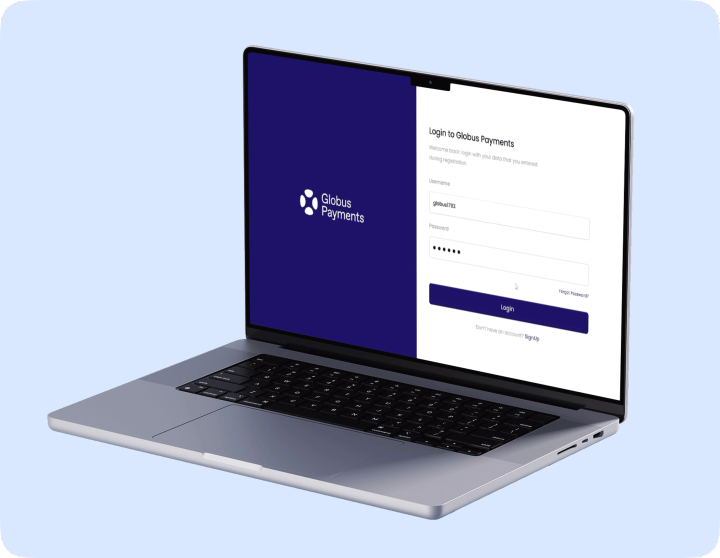
    We've been the technology partner of Globus Payments, an EMI-licensed payments company in London serving the logistics sector, since it launched. We built its API integrations with banks and financial service providers, plus the compliant onboarding flows its business clients go through.

    Learn more
  • Card Platforms

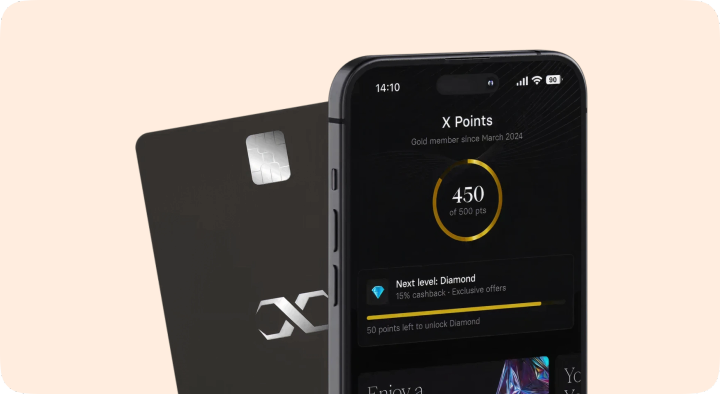
    For Axys, we built a card platform that lets high-net-worth individuals top up their cards with cryptocurrency. The core technical challenge was linking crypto exchange APIs to the card issuing infrastructure so cardholders get a single experience.

    Let's talk
  • Trading Platforms

    Trading software lives or dies by real-time data. For Ampang, an AI-powered crypto trading bot, we built market data pipelines with Kafka and WebSockets across Binance, Coinbase Pro and Kraken. We also deployed the reinforcement learning models that make its trading decisions on their own.

    Learn more
  • Wealth Management Software

    Wealth management software turns portfolio and market data into positions, performance and insight that advisers and clients can rely on. We build the data processing behind it, plus dashboards that stay accurate across multiple asset classes.

    Let's talk
  • Crypto Exchanges

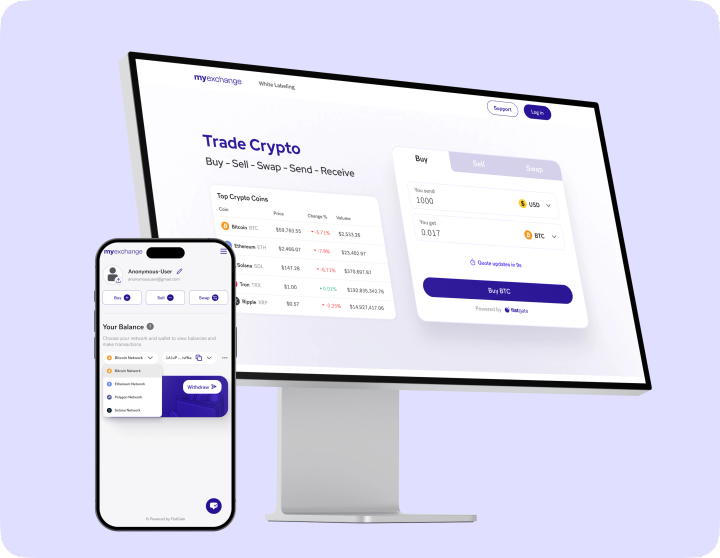
    We built FiatGate, a white-label, non-custodial crypto exchange where the product itself is the payment infrastructure. Exchange software combines real-time pricing, trading engines, wallet integrations and liquidity management in one platform.

    Learn more
  • KYC Onboarding Software

    Know Your Customer checks decide how fast a customer can start using your product and how well you can defend each onboarding decision to a regulator. KYC software has to verify identity, screen against sanctions lists and record every step in an audit trail.

    Learn more
  • Insurance Software

    InsurTech platforms digitise policy management, claims handling and back-office operations, and give customers a portal on top. The usual challenge in insurance software is connecting modern front ends to policy systems that were never built for real-time access.

    Learn more
  • Financial Data Analytics

    Financial data analytics brings transaction, market and customer data together, so you can spot patterns in risk, performance and fraud. We build the pipelines and models behind it, including the streaming setup you need when decisions depend on data from the last few seconds.

    Let's talk

Financial Organisations We Build Software For

Financial services software development looks different for a bank than for a crypto start-up, because the pressure comes from different places: regulators, legacy systems, transaction volume or speed to market. A partner has to work out which of those drives your organisation before writing the first line of code.

Banks

Few banks start from scratch. New digital products have to work alongside a core banking system that holds the ledger, so most of the effort goes into safe integration, phased migration and reporting that satisfies supervisors.

Payment and E-Money Institutions

PSD2 and safeguarding rules shape every onboarding and payment flow at a payment or e-money institution. Our work for EMI-licensed Globus Payments is a case in point.

Insurers

For insurers, the priority is faster claims handling and giving customers access to their policy data without exposing more than necessary. Much of the work is modernisation, bringing ageing policy systems into digital channels.

Wealth Managers

Wealth and asset managers compete on the quality of their data and on how clear the picture is for their clients. Their software has to reconcile positions across asset classes and data sources before any dashboard is worth showing.

Crypto Businesses

Crypto businesses have to combine exchange logic and wallet security in one product, and more of them now need a regulatory licence too. FiatGate and Axys are two of the crypto products our teams have built.

FinTech Start-Ups and Scale-Ups

Speed to market matters most for FinTech start-ups and scale-ups, as long as technical debt doesn't trip them up at their first audit. FinTech software development is its own discipline within financial software: new products built from scratch, where the app, the backend and often AI features have to launch together. A Dedicated Team that grows with the product lets them add engineers without long hiring rounds.

Financial software development dashboard
Build or Buy

When Custom Financial Software Makes Sense

Custom isn't always the answer. For most standard payment and banking needs, integrating an established provider is the faster and safer route. Custom financial software development pays off when full control is worth the extra responsibility: at high volume, for a white-label product or flows no provider supports.

Integrate an Established Provider

Payment providers, KYC services and banking-as-a-service platforms cover standard needs out of the box, including much of the compliance burden. You trade control and margin for speed, and we build the integrations and the product around them.
Build on a Licensed Platform

A licensed core banking or wealth platform gives you proven ledger and product logic to configure and extend. We don't sell one ourselves. We build the integrations, extensions and customer-facing layers on top of whichever platform you choose.

Build Custom Software

Custom makes sense when the software itself is your product or your edge, as with FiatGate, where the product was the infrastructure. Every decision is yours, and so are PCI DSS scope, fraud prevention and maintenance.

Regulation

Financial Regulation Your Software Must Handle

Regulation belongs at the start of a project, because each framework below turns into concrete requirements in the software. Our payment work for an EMI-licensed client showed that designing them in costs far less than retrofitting them. Compliance remains the licensed firm's responsibility. The development partner builds software that meets those obligations and can prove it.

  • PSD2 Strong Customer Authentication

    PSD2 in the EU and the Payment Services Regulations in the UK require strong customer authentication: at least two independent factors for logins and payments, with limited exemptions. They also require secure, regulated access to account data for open banking. Both shape your login flows, payment journeys and API design.

  • PCI DSS Cardholder Data Scope

    Any system that stores, processes or transmits card data falls within the scope of the Payment Card Industry Data Security Standard (PCI DSS). The design goal is to keep that cardholder data environment as small as possible, for example through tokenisation or a provider-hosted payment page, because every component in scope has to meet the full standard.

  • GDPR and Financial Record-Keeping

    GDPR asks you to minimise personal data and honour erasure requests, while financial and anti-money-laundering rules oblige you to keep certain records for years. Your software has to handle both: retention rules per data type, and erasure that stops where a legal retention duty begins.

  • KYC and AML Checks

    Know Your Customer and anti-money-laundering (AML) rules decide how customers are onboarded, screened and monitored. In software terms that means identity verification, sanctions and politically exposed person screening, ongoing transaction monitoring and an audit trail that shows a regulator why each decision was made.

  • DORA Third-Party Requirements

    The EU Digital Operational Resilience Act (DORA) has applied to EU financial entities since 17 January 2025. It covers ICT risk management, incident reporting and resilience testing, and it reaches the technology providers they rely on through contract requirements and oversight. Expect your development partner to appear in your register of ICT arrangements.

  • UK Operational Resilience

    Under FCA and PRA rules, UK firms have had to show since 31 March 2025 that they can keep important business services within impact tolerances during severe but plausible disruption. That includes mapping the technology and third parties behind each service, so your software's dependencies need to be documented and testable.

How We Engineer Financial Software

Three engineering decisions separate financial software that holds up in production from software that needs rescuing: how financial data is protected, how the new system connects to the core you already run, and whether the architecture stays stable when transaction volume spikes.

Security Around Money and Personal Data

Financial software needs encryption in transit and at rest, multi-factor authentication, role-based access and tamper-evident audit logs built into the design rather than added in a later hardening sprint. Security testing belongs in every release, so weaknesses surface before an auditor finds them.

Integration With Your Existing Core Systems

New financial software almost always has to run alongside a core system that holds the ledger. We work API-first and migrate in phases instead of replacing everything at once. For Globus Payments, integrations with banks and financial service providers were central to the platform from the start.

Architecture That Scales With Transactions

Event streaming with Kafka and Redis Streams and containerised services on Kubernetes let each component scale on its own, so a spike in payments doesn't take down onboarding or reporting. Ampang's real-time trading data runs on this kind of architecture.

Financial software development team planning an architecture
Choosing a Partner

How to Choose a Financial Software Development Company

The right financial software development company is rarely the one with the longest technology list. Six questions separate a partner you can trust with regulated software from one that becomes a risk, and you can put them to any vendor, including us.

A Track Record With Regulated Financial Products

Ask for products a partner has shipped in regulated markets, since a demo proves little. Ours include FiatGate, a white-label non-custodial exchange, plus payment infrastructure for EMI-licensed Globus Payments and a crypto card platform for Axys.

Experience Integrating Banks and Financial Providers

Financial projects most often slip at the integration layer. Ask which banks, payment providers and financial APIs a partner has connected before. At Globus Payments, those integrations were the backbone of the platform.

Code and IP Ownership That Stays With You

Check who owns the code before anything is built. Under our standard contracts you own the code and the intellectual property, whether you work with a Dedicated Team, Team-as-a-Service or a project-based engagement.

A Team That Works Inside Your Own Process

Quality slips when a remote team works as a black box. Our engineers join your standups, Slack channels and tools. They're vetted for communication and cultural fit and work under Western on-site management in our hubs.

Straight Answers on Access to Your Data

Agree in writing which environments the team works in, whether anyone can access production or customer data, and how that access is logged and revoked. A partner used to regulated work answers these questions without hesitation, so ask us too.

Room to Scale Without Lock-In

Roadmaps change, and your team should be able to change with them. We work without long-term contracts, so you can scale the team up or down as your product requires.

Our Process

Our Financial Software Development Process

Financial projects usually go wrong at the start, when regulation and existing systems aren't mapped, or after launch, when nobody owns the platform. Our four-step process puts real weight on both ends.

Step 1: Discover & Define - Process illustration
Step 2: Assemble Elite Financial Software Teams - Process illustration
Step 3: Design, Develop & Deliver - Process illustration
Step 4: Nurture & Evolve - Process illustration
Build your team

Engagement Models for Financial Software Development

The right engagement model depends on how much day-to-day management capacity you have in-house, whatever the size of the project. Outstaffing, our Dedicated Teams model, gives you a remote team that works as part of your organisation while you keep day-to-day management.

Dedicated Teams

Choose Dedicated Teams when you have a tech lead or product owner to direct the work. The team works exclusively on your product, builds deep domain knowledge and takes direction from you. That suits long-term development of a regulated platform.

Team-as-a-Service

Team-as-a-Service fits when you want expert capacity without managing developers yourself. We manage the team, its quality and its priorities in line with your roadmap, and you can scale it without long commitments.

Project-Based Development

Project-Based Development suits a clearly defined initiative, such as a new onboarding flow or a payment integration. We take end-to-end responsibility for planning and delivery within the agreed scope.

Technologies

Our Tech Stack for Financial Software

We pick proven technologies that stay correct under load and are easy to maintain for years. Node.js, Python, Django and Ruby on Rails run the backend. React, Next.js, Vue.js, React Native and Flutter cover web and mobile. Kafka, Redis Streams and WebSockets handle real-time financial data on Docker, Kubernetes and AWS, with TensorFlow for machine learning and Solana and Ethereum for blockchain builds.

Angular
.NET
C#/C++/C
PHP
Pulumi
Databricks
Flutter
React.js
JavaScript
Docker
Kubernetes
AWS
Angular
.NET
C#/C++/C
PHP
Pulumi
Databricks
Flutter
React.js
JavaScript
Docker
Kubernetes
AWS

Global Reach

Established in 2021. Our team spans 4 countries (The Philippines, The Netherlands, Hong Kong, Armenia), delivering 100+ transformative projects across the world.

Our Work

Trusted by companies we've helped grow

A selection of the products our embedded teams have helped build.

  • Globus

    Globus Payments

    Globus Payments is a London-based provider of EMI-licensed payment solutions for the logistics sector. Our team built the API integrations that connect its payment services to its clients' systems.

    Read the case study
  • Axys Holding

    Axys

    Axys provides card solutions for high-net-worth individuals, with crypto top-up of the card balance. We delivered the web development behind the platform.

    Read the case study
  • Fiatgate

    FiatGate

    FiatGate is a white-label platform that lets businesses launch their own branded, non-custodial crypto wallet and exchange. We built the complete platform in JavaScript, with third-party APIs for wallet management and exchange functionality.

    Read the case study
View all case studies

Book a Discovery Call About Your Platform

In a Discovery call we look at your product, the systems you already run and the regulations you work under. You leave knowing which route fits, whether that's a provider, a platform or custom software, and which engagement model suits your team.

FAQs

Frequently Asked Questions About Financial Software Development