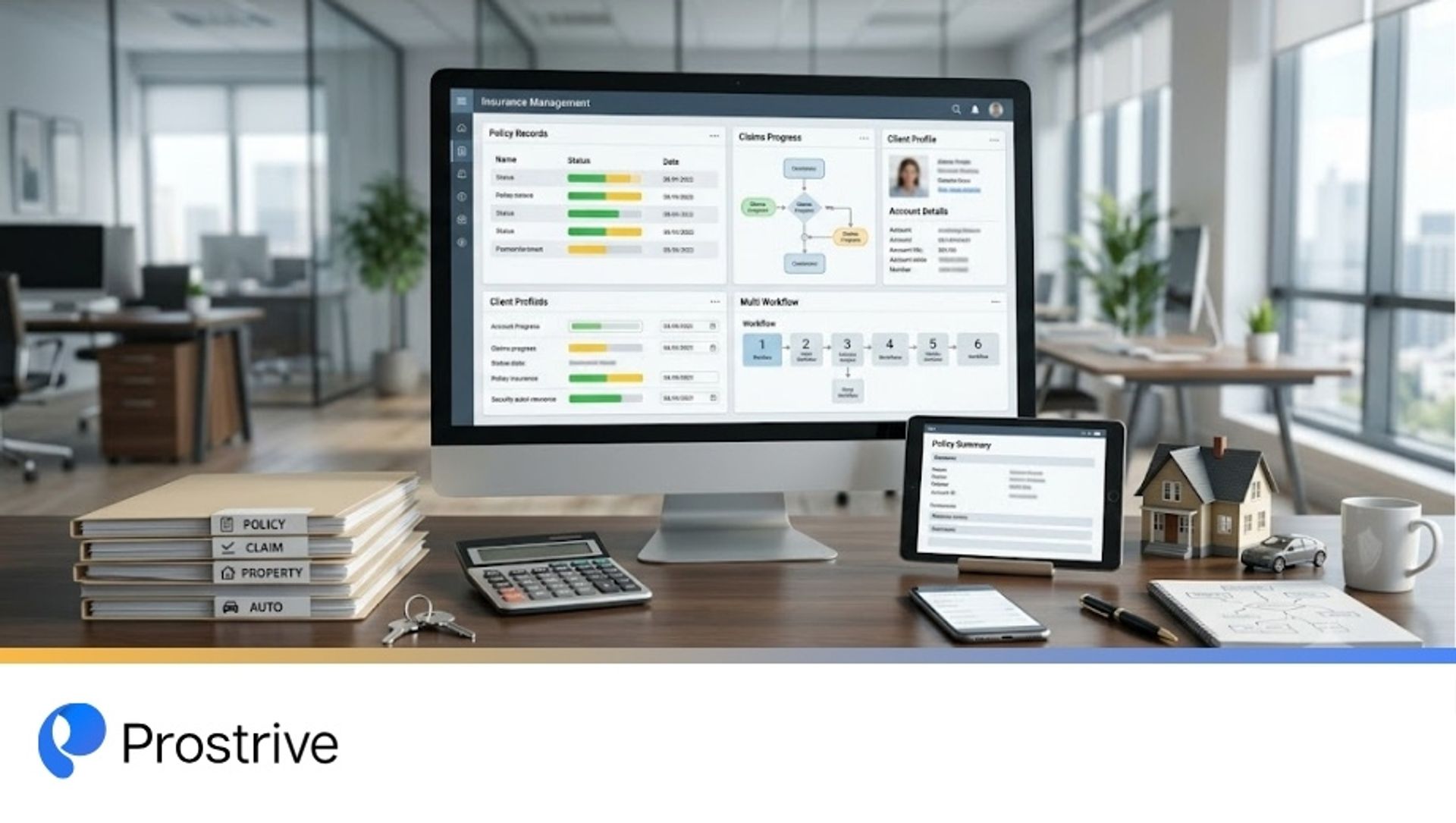
Insurance software is a set of digital tools that help insurers, brokers and agents manage policies, claims, underwriting and customer relationships in one connected system. It replaces manual paperwork and disconnected spreadsheets with automated workflows that cut processing time and reduce errors.
Knowing what insurance software does is the first step before you weigh ready-made platforms against custom insurance software development built around your own processes.
What Does Insurance Software Do?
Insurance software runs the core operational work of an insurance business. It covers the whole policy lifecycle: quoting, underwriting, policy administration, billing and claims. By automating repetitive admin and routing work to the right person, it lets teams spend less time on manual tasks.
It also connects the front office and back office. Agents, underwriters and finance teams work from the same data, while policyholders get self-service access to their documents. Where the rules allow it, straight-through processing takes a simple case all the way to a decision without manual steps, which is how modern insurers handle high volumes at speed.
Main Types of Insurance Software
The main types of insurance software each cover a specific part of the insurance workflow. Most insurers run several of these systems together, either as separate tools or as modules inside one platform. The five below form the backbone of day-to-day operations.
Policy Administration Systems
A policy administration system manages the full policy lifecycle: quoting, issuance, endorsements, renewals and cancellation. It holds the record of every policy and recalculates premiums when details change. For lines like auto insurance, where mid-term changes are frequent, this automation removes hours of manual lookups.
Claims Management Software
Claims management software handles a claim across its whole journey. It captures the first notice of loss, validates the details, routes the case to the right adjuster and tracks every step through to settlement. Automating intake and triage cuts settlement times, and clear status updates keep policyholders informed.
Underwriting Software
Underwriting software supports risk assessment and pricing decisions. It applies predefined rules and data analytics to evaluate an application, so underwriters can clear straightforward cases in minutes and focus on complex risks. Consistent rules also reduce human error in pricing.
Building insurance software?
We build claims, policy administration, underwriting and customer portal software for insurers and InsurTechs.
Explore insurance software developmentBilling and Payments Software
Billing and payments software manages premium invoicing, collections and reconciliation. It schedules payments, issues reminders and connects to payment providers, giving finance teams an accurate view of what is owed. Tight integration with the policy system keeps billing aligned with every coverage change.
Insurance CRM Software
Insurance CRM software centralises client relationships, leads and renewals in one place. It records every interaction, flags upsell and cross-sell moments and tracks agent performance in real time. Paired with a customer portal, it lets policyholders view cover, file claims and update details without waiting on a call.
Key Features of Modern Insurance Software
Modern insurance software shares a set of features that separate a capable platform from a basic tool. Workflow automation sits at the centre, taking over data entry, document routing and approvals. Data analytics and reporting turn policy and claims data into insight for pricing and product decisions.
Integration matters just as much. Open APIs let the software exchange data with accounting systems, payment providers and third-party data sources, so nothing lives in a silo. Document management with OCR keeps applications and claim forms searchable, while built-in compliance tools generate audit trails and flag terms that fall outside regulatory limits. Strong security, including encryption, role-based access and multi-factor authentication, protects the sensitive data insurers hold.
Benefits of Insurance Software for Insurers
The benefits of insurance software show up across the whole operation, not just in one department. Faster claims and policy processing free adjusters and agents to focus on complex, high-value work. Automated rules improve accuracy, since fewer manual handoffs mean fewer mistakes in pricing and documentation.
Compliance is a clear gain too. Automated reporting and end-to-end audit trails help insurers meet their obligations under the FCA in the UK and GDPR for data protection. They also support the EU's Solvency II framework and make regulatory reviews far less painful. On top of that, cleaner data supports better decisions, and a system that scales lets you add new products and volume without rebuilding from scratch.
Building Custom Insurance Software
Building custom insurance software makes sense when ready-made platforms can't match how you actually work. Off-the-shelf systems get you live quickly and cost less upfront, and for many insurers they're the right call. The trade-off is fit: you adapt your processes to the software, and you compete on the same tooling as everyone else on that platform.
A custom build flips that. You get a system shaped around your workflows, your integrations and the products that set you apart. That's often the point where insurtech founders choose to build rather than buy.
A custom build asks for more investment and a partner who understands both the technology and the regulatory weight of financial products. That's where our background in custom FinTech software development carries over, together with the compliance-first habits that FCA and GDPR-regulated work demands.
We work as a dedicated development team, an extension of your own in-house team rather than a black-box vendor, so you keep full control of the roadmap. If you're weighing a custom build, a Discovery call is a low-commitment way to map the scope and see whether it fits your plans.