A payment gateway is the technology that captures a customer's payment details at checkout and passes them securely to the banks that authorise or decline the transaction. It works as the link between your website or app and the payments network, encrypting card data so funds move safely between the customer and your account.
This guide explains how a payment gateway works, the main types, how to choose one, and where custom payment gateway development sits within a wider FinTech software development services.
How Does a Payment Gateway Work?
A payment gateway works by encrypting a customer's payment data and routing it through the card networks and banks in a matter of seconds. The simple checkout you see hides several steps that verify the card and confirm the money is there.
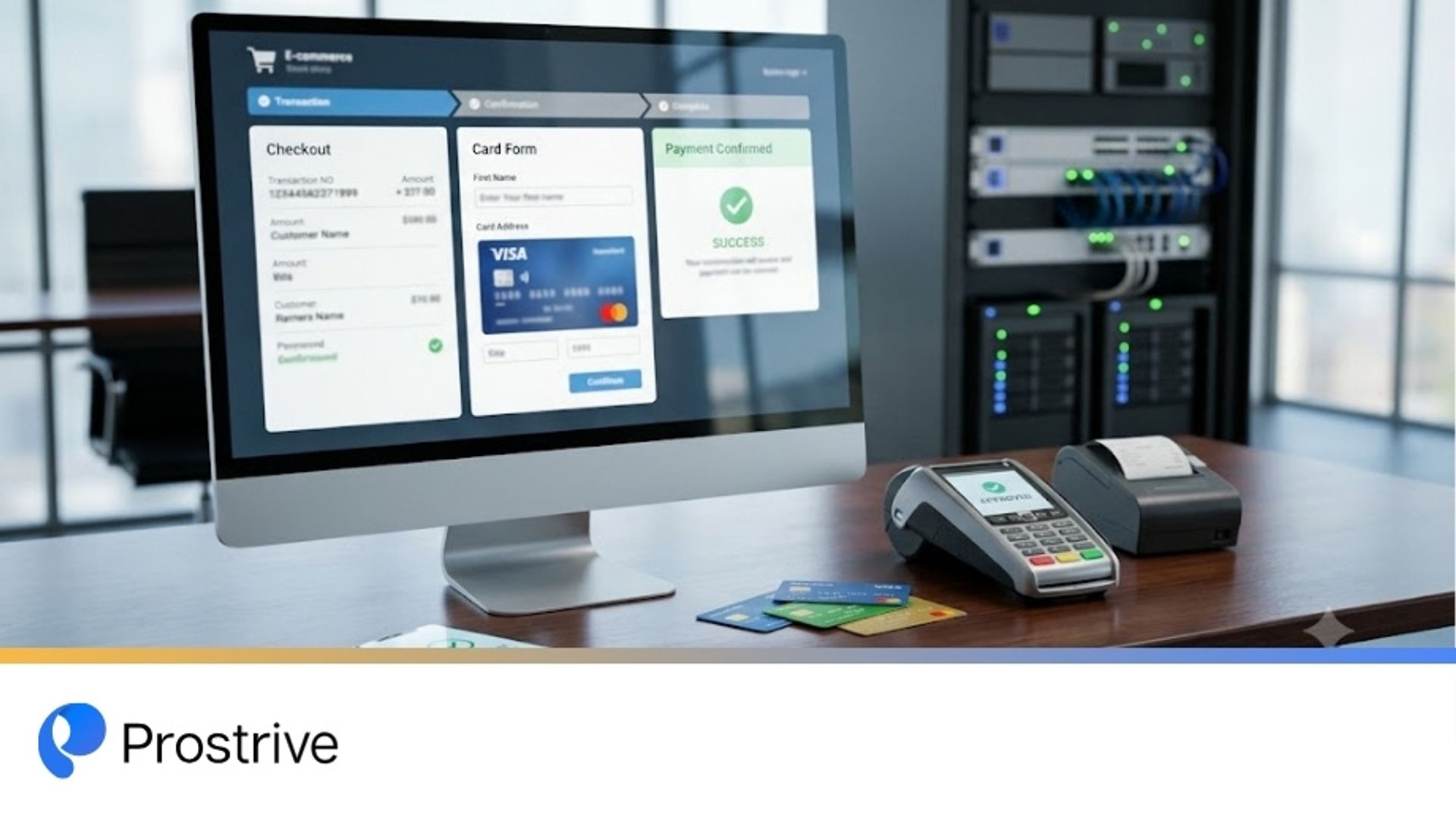
Here's the sequence. The customer enters their card details and confirms the purchase, and the gateway encrypts that data and sends it to the acquiring bank. The request then passes through the card network to the customer's issuing bank.
The issuing bank checks the available funds and either approves or declines the payment. That response travels back through the gateway so you can complete or reject the order. The whole exchange usually takes a couple of seconds.
Behind that approval sits a second step called capture, when the authorised funds are actually claimed. Some businesses authorise a card at checkout and capture the money later, for example once an order ships or a booking is confirmed.
Settlement is another separate stage. Once a payment is captured, the acquiring bank collects the funds and moves them to your merchant account, often a day or two later. Standards like 3D Secure add an authentication step, which matters for UK and EU cards under Strong Customer Authentication rules.
What Are the Main Types of Payment Gateways?
The main types of payment gateways differ in where the customer enters their card details and how much of the security burden sits with you. Three models cover most setups: hosted, integrated, and white-label gateways.
Hosted Payment Gateways
A hosted payment gateway sends the customer to a payment page run by the provider, then returns them to your site once the payment clears. Because the card data is entered on the provider's servers, most of the PCI DSS compliance load sits with them rather than you. That makes hosted gateways quick to set up and light on maintenance, at the cost of some control over the checkout experience. They suit smaller businesses and new stores that want a secure setup without a heavy compliance burden.
Integrated Payment Gateways
An integrated payment gateway keeps the customer on your own site or app and handles the payment through the provider's API. You control the full checkout and branding, which tends to convert better, but you take on more of the security and compliance work. This route needs more developer input, both to build it and to maintain it, and it usually means taking on a higher level of PCI DSS compliance yourself.
Building a payment gateway?
We build custom payment gateways, from routing and tokenisation to reconciliation and merchant onboarding.
Explore payment gateway developmentWhite-Label Payment Gateways
A white-label payment gateway lets a business apply its own branding to a third-party gateway, so the payment experience looks native to your product. Marketplaces and SaaS platforms often use this model to offer payments under their own name without building the underlying infrastructure. It's a middle path between plugging in an off-the-shelf provider and building a gateway from scratch.
How Do Payment Gateways Keep Payments Secure?
Payment gateways keep payments secure by encrypting card data, replacing it with tokens, and meeting recognised industry standards. The aim is that sensitive card details are never exposed in a form an attacker could reuse.
Encryption protects data as it moves between the customer, your servers, and the banks. Tokenisation goes a step further by swapping the real card number for a random token, so your systems store a reference instead of the card itself. Fraud checks and authentication steps like 3D Secure add another layer, flagging suspicious transactions before they settle. Most providers also run continuous monitoring, so unusual patterns, like a sudden spike in failed attempts, get picked up in real time.
Compliance ties this together. PCI DSS sets the baseline for handling card data, and in the UK and EU, PSD2 and Strong Customer Authentication govern how customers verify a payment. In our experience building fintech platforms, treating these rules as design constraints from the start costs far less than retrofitting them later.
How to Choose a Payment Gateway
Choosing a payment gateway comes down to matching its fees, features, and reach to how your business actually takes payments. There's no single best option, only the one that fits your model, your markets, and your growth plans.
Weigh up a few things: the total cost, including monthly and per-transaction fees; the payment methods and currencies you need, especially for cross-border sales; how well it integrates with your existing stack; and the level of PCI DSS support the provider offers. Scalability matters too, since a gateway that copes at launch may struggle as volumes climb. It's worth checking the reporting and dashboards on offer as well, because clear transaction data makes reconciliation and fraud monitoring much easier.
For many businesses an established provider is enough. Others reach a point where an off-the-shelf gateway can't support their pricing, payment flows, or compliance needs, and a custom build becomes the better long-term call.
Building a Custom Payment Gateway
Building a custom payment gateway makes sense when an existing provider can't match your payment flows, your margins, or your compliance needs. It's a larger commitment than an integration, but it gives you full control over the checkout, the data, and how the system scales.
We've built payment and fintech platforms for European scale-ups, including EMI-licensed payments work, so we know where the real effort and regulatory weight sit. If you'd like to understand what FinTech software development involves before you start, we're happy to talk it through on a Discovery call.